 Admin
Admin Quick Answer
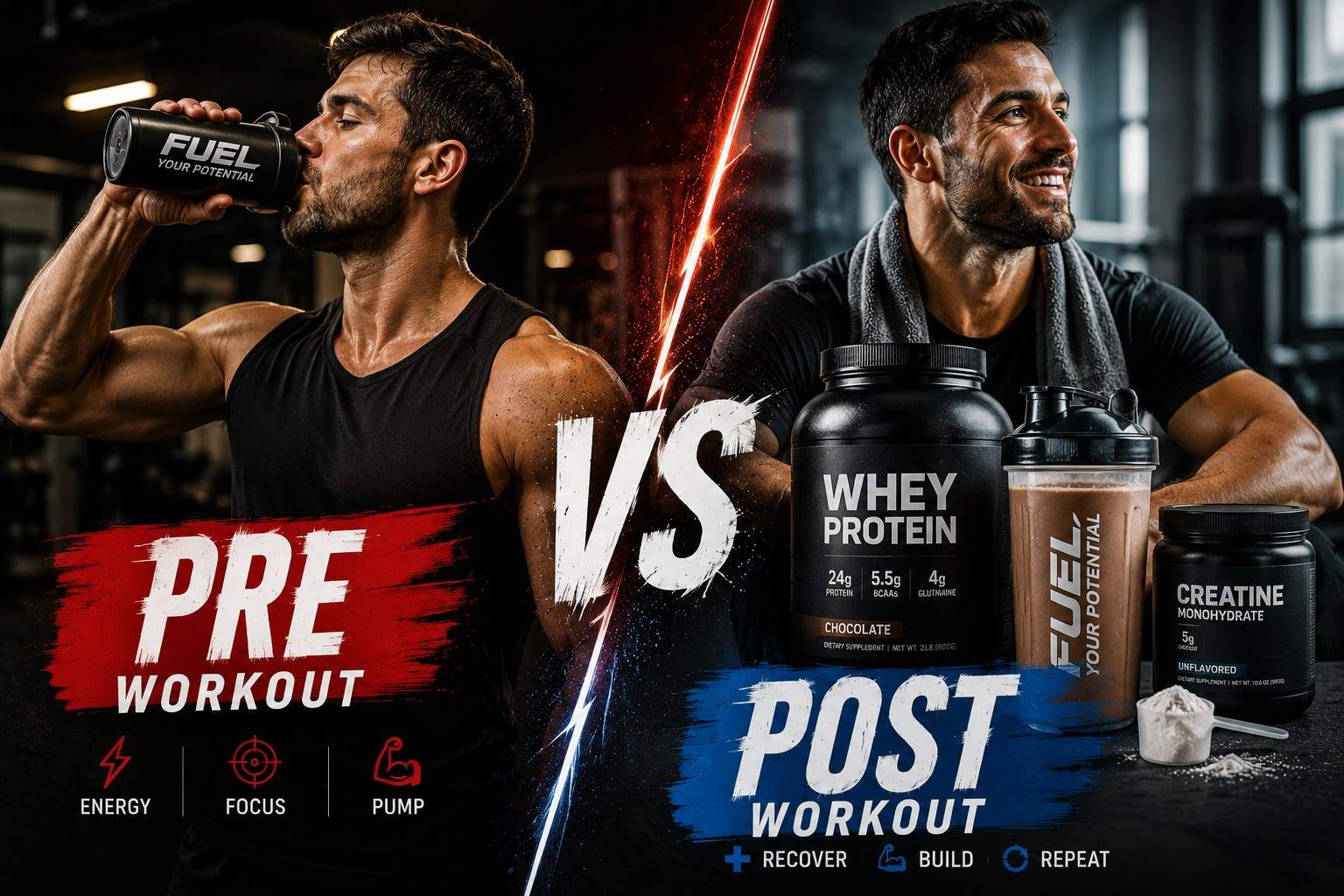
Pre-workout is a supplement taken 20–30 minutes before exercise to boost energy, focus, and endurance. Post-workout is taken within 30–60 minutes after exercise to repair muscle, restore energy, and speed up recovery. Both are core supplements in any serious fitness routine — one fuels the session, the other rebuilds the body after it.
If you’ve walked into a GNC in the US or a supplement store in Bangalore, you’ve seen rows of colorful tubs labeled “PRE” and “POST.” You’ve probably seen people mix something in a shaker before a lift or chug a protein shake on the way home from the gym.
But what actually are these supplements? What’s inside them? Do they really work? And do YOU need both?
This complete pre workout vs post workout guide explains which supplement you should take and when.
If you’re confused about what is pre workout and post workout supplements, this guide explains everything in simple terms.
What Is a Pre Workout Supplement and How Does It Work?

A pre-workout supplement is a formula you consume before training to prepare your body and mind for peak performance. It primarily targets energy, focus, blood flow, and endurance.
Think of it as your warm-up in a bottle. On days when you’re tired from work, low on motivation, or just dragging, a well-formulated pre-workout can flip the switch and get you locked in before you even step into the gym.
Pre-workout supplements usually come in powder form that you mix with water, though capsules and ready-to-drink versions also exist.
Understanding pre workout and post workout ingredients helps you choose supplements that actually work.
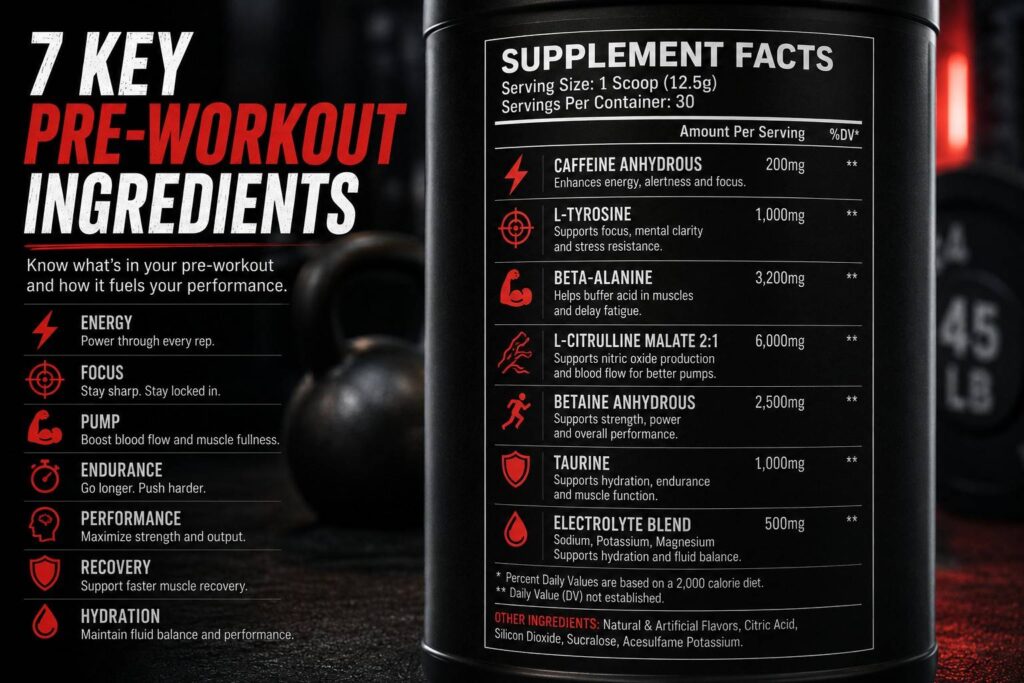
7 Key Ingredients in Pre-Workout and What They Do
1. Caffeine — The Energy Engine
Caffeine is the backbone of almost every pre-workout on the market. Most pre-workouts contain 150–400mg of caffeine per serving — equivalent to 2–3 cups of coffee. It works by blocking adenosine receptors in the brain, which reduces feelings of tiredness and boosts alertness.
Research consistently shows that caffeine reduces perceived effort during exercise, meaning your workout feels easier at the same intensity. For gym-goers in India who train early in the morning or after long office hours, this is genuinely useful.
Dosage tip: 150–200mg is ideal for beginners. Stay under 400mg to avoid jitteriness or a post-workout crash.
2. Beta-Alanine — The Endurance Buffer
Beta-alanine is an amino acid that helps buffer the acid buildup in your muscles during intense exercise. When your muscles burn during a hard set — that burning sensation — it’s partly caused by metabolic acidosis. Beta-alanine delays that point, allowing you to squeeze out more reps.
The research-backed dose is 3.2–6.4 grams. Many budget pre-workouts under-dose this ingredient, so always check the label. One side effect: it causes a harmless tingling sensation on your skin, especially on your face and hands. This is called paresthesia and is completely normal.
3. L-Citrulline / Citrulline Malate — The Pump Ingredient
Citrulline is a nitric oxide precursor. When you take it, your body converts it to arginine, which then triggers the release of nitric oxide — a molecule that widens blood vessels. The result is more blood flowing to your working muscles, which creates the “pump” you feel during a good workout.
Beyond aesthetics, this improved blood flow means more oxygen and nutrients reaching muscle tissue while you train. Studies use 6–8 grams for meaningful performance benefits — if your pre-workout has less than that, the effect will be minimal.
4. Creatine — The Strength Booster
Some pre-workouts include creatine, one of the most studied performance supplements ever. Creatine works by replenishing your ATP stores — the immediate energy your muscles use for powerful contractions. This translates directly to more strength, more explosive reps, and better muscle growth over time.
Note: Creatine needs to accumulate in muscle tissue over time. A single dose won’t make a difference — consistent daily use (3–5g) is where the benefits come from.
5. B-Vitamins — The Metabolic Support
B vitamins, especially B6 and B12, support energy metabolism. They help your body convert food into usable fuel. Most quality pre-workouts include a B-vitamin complex to support the energy-generating effects of other ingredients.
6. Taurine — The Focus and Hydration Aid
Taurine is an amino acid that supports brain function, nerve health, and cellular hydration. It helps with mental focus during workouts and may reduce exercise-induced oxidative stress. It also counterbalances some of the overstimulation that comes from high-caffeine formulas.
7. Electrolytes — The Hydration Foundation
Some premium pre-workouts include sodium, potassium, and magnesium. These electrolytes are lost through sweat and are critical for muscle contractions and preventing cramps. For Indian users who train in hot climates, this ingredient matters more than it gets credit for.
When Should You Take Pre-Workout?
The sweet spot is 20–30 minutes before your workout. This gives caffeine and other ingredients enough time to enter your bloodstream and kick in at the right moment — not at the start of your warm-up and not after your workout is half over.
If you take it too close to training, the ingredients hit their peak after your session ends. If you take it too early, the energy may fade before you finish. Some experts suggest taking it 45–60 minutes before for very intense, long sessions.
Avoid taking pre-workout within 6 hours of bedtime — the caffeine will disrupt your sleep, and poor sleep is one of the biggest killers of muscle growth and recovery.
What Is Post Workout and Why Does It Matter?
Post-workout supplements are taken within 30–60 minutes after exercise to kick-start the recovery process. During a workout, your muscle fibers develop micro-tears, your glycogen stores are depleted, and your body enters a breakdown state. Post-workout nutrition reverses all of that.
If pre-workout is the gas pedal, post-workout is the repair crew.
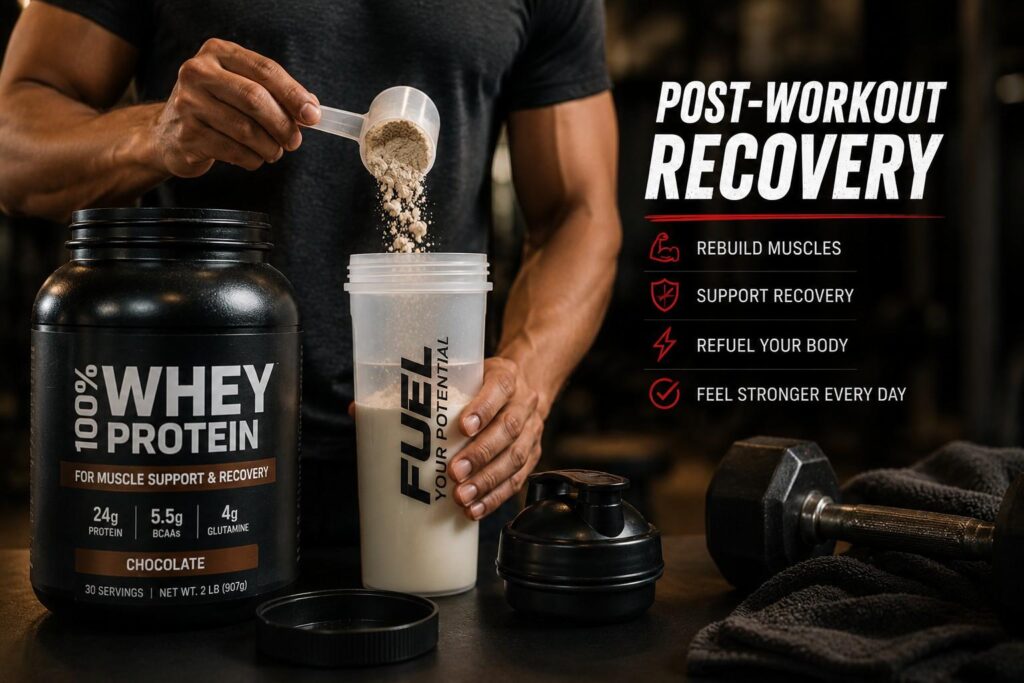
7 Key Ingredients in Post-Workout and What They Do
1. Whey Protein — The Muscle Rebuilder
Whey protein is the king of post-workout nutrition. It’s a fast-digesting, complete protein derived from milk, rich in all essential amino acids, particularly leucine — the amino acid that directly signals muscle protein synthesis to begin.
Studies show that whey protein supplementation reduces markers of muscle damage like creatine kinase, decreases soreness, and accelerates the recovery of muscle function after intense training. A serving of 20–30 grams post-workout is the science-backed sweet spot for most people. The International Society of Sports Nutrition (ISSN) recommends 20–40 grams of protein every 3–4 hours to consistently support muscle repair and growth.
For Indian users who may be lactose sensitive, whey protein isolate (WPI) is more refined and contains less lactose than concentrate.
2. Creatine Monohydrate — The Recovery and Strength Compound
While creatine is often associated with pre-workout, research actually shows post-workout creatine may produce better results for building muscle mass and strength than pre-workout creatine alone. It restores phosphocreatine levels in muscle tissue, preparing you for your next session.
Recommended dose: 3–5 grams post-workout, consistently every day. Results compound over weeks of use, not days.
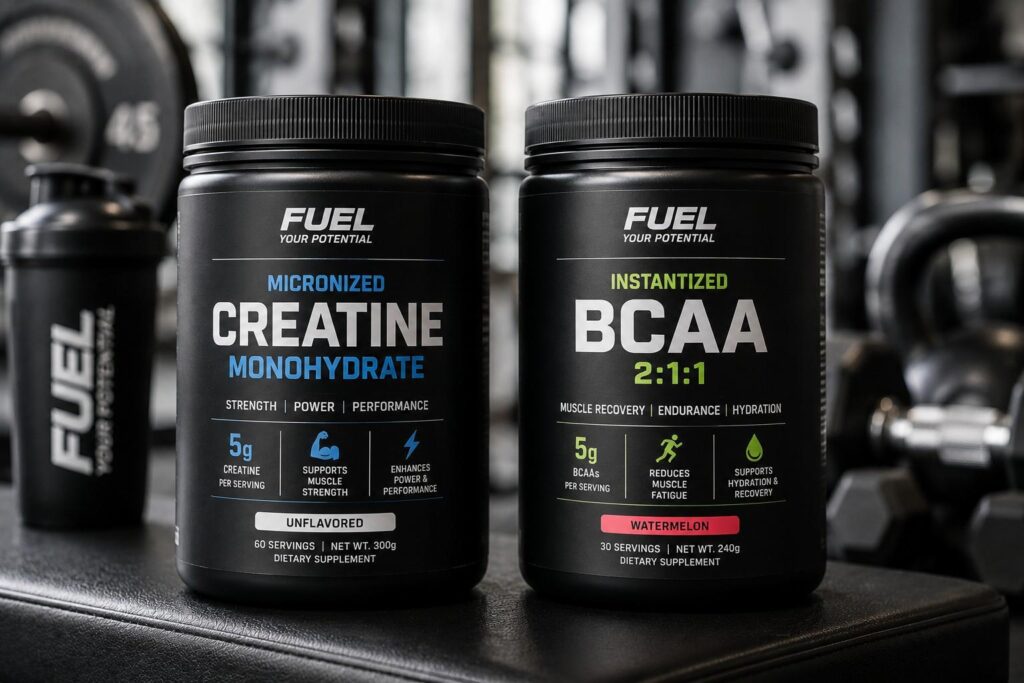
3. BCAAs (Branched-Chain Amino Acids) — The Anti-Breakdown Shield
BCAAs consist of three amino acids: leucine, isoleucine, and valine. These are primarily metabolized directly in muscle tissue, unlike other amino acids that go through the liver first. This makes them uniquely fast-acting for muscle support.
Post-workout BCAAs help:
- Reduce muscle protein breakdown after training
- Promote muscle growth over time
- Decrease next-day soreness (DOMS)
- Support lean body mass preservation during fat loss phases
4. Fast-Digesting Carbohydrates — The Glycogen Refueler
Carbohydrates replenish muscle glycogen — the stored fuel your muscles burn during exercise. After a hard session, your glycogen tank is significantly depleted. Consuming fast carbs post-workout (like dextrose, maltodextrin, or even a banana) restores that energy for your next workout.
The protein-carb combination is especially powerful: consuming both together post-workout stimulates more muscle protein synthesis than protein alone in many studies.
5. L-Glutamine — The Recovery Amino Acid
Glutamine is the most abundant amino acid in your blood and muscle tissue. Intense training depletes glutamine stores significantly, which can weaken your immune system and slow recovery. Supplementing with 5 grams post-workout helps restore those stores, reduces muscle soreness, and may improve gut health.
For people in a caloric deficit or “cutting” phase, glutamine is especially valuable for preserving lean muscle tissue.
6. Electrolytes — The Hydration Restorer
Post-workout electrolytes (sodium, potassium, magnesium) restore what was lost through sweat. Without adequate electrolyte replenishment, your body stays dehydrated at the cellular level even if you drink plenty of water. This impacts next-day performance and recovery quality.
7. L-Carnitine L-Tartrate — The Soreness Reducer
L-Carnitine L-Tartrate (LCLT) is a compound that has been shown to reduce exercise-induced muscle damage and improve recovery of muscle function. Studies confirm it can lower soreness levels and speed up the rate at which damaged muscle tissue recovers. Some high-end post-workout formulas like Legion Recharge combine it with creatine for maximum effect.
The biggest difference between pre workout and post workout supplements is their purpose — one improves performance while the other improves recovery.
Pre workout vs post workout supplements comparison
| Feature | Pre-Workout | Post-Workout |
|---|---|---|
| Purpose | Boost energy, focus, performance | Repair muscles, restore energy |
| When to Take | 20–30 min before training | 30–60 min after training |
| Core Ingredients | Caffeine, Citrulline, Beta-Alanine | Protein, Creatine, BCAAs |
| Primary Benefit | Train harder and longer | Recover faster and grow stronger |
| Who Needs It | Anyone wanting more energy/focus | Anyone training consistently |
| Can You Skip It? | Yes, on low-intensity days | Ideally no — recovery is non-negotiable |
| Main Risk | Caffeine dependency, sleep disruption | Excess calories if not needed |
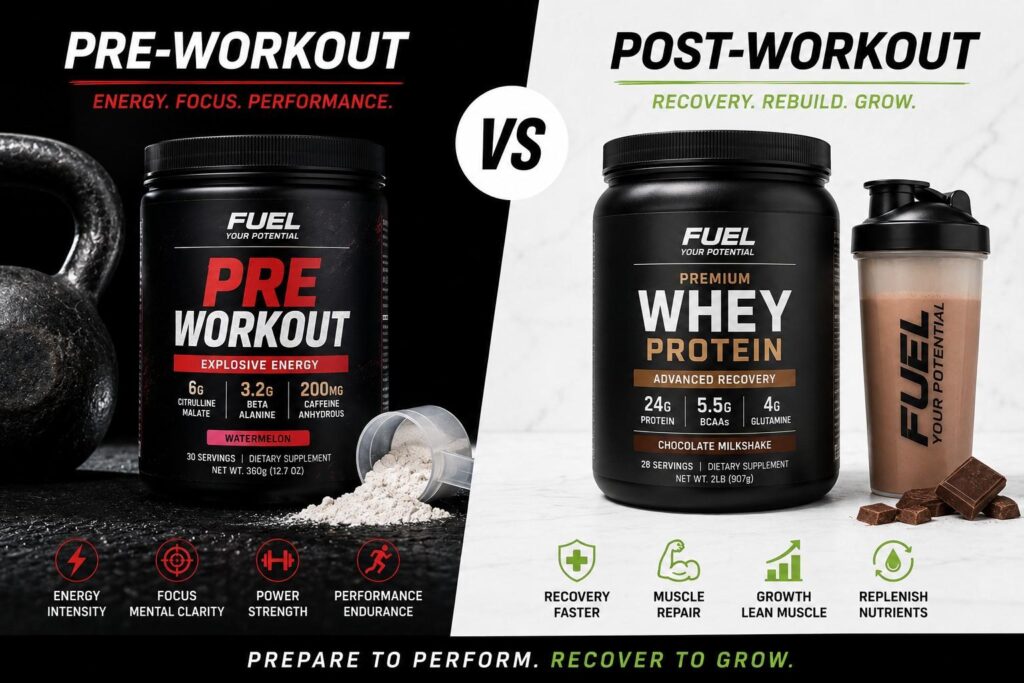
Do You Need Both Pre-Workout and Post-Workout?
Short answer: Yes, if you train consistently and want results.
They serve completely different purposes. Pre-workout helps you put in a better training session. Post-workout ensures that session actually produces results. Skipping post-workout recovery is like building a house and forgetting to lay the foundation — the effort goes to waste.

That said, here’s a practical breakdown:
- Beginners: Focus on post-workout first. Protein and creatine post-workout will produce the most visible results early on.
- Intermediate/Advanced lifters: Add pre-workout on hard training days or when energy is genuinely low.
- Budget-conscious users (India): Whey protein + creatine post-workout gives you the best return on investment before adding any pre-workout.
- US fitness enthusiasts: Both supplements are widely accessible and affordable enough to use together from the start.
5 Common Mistakes People Make With Pre and Post Workout
Mistake 1: Taking pre-workout too late Taking it in the locker room means it peaks after you finish. Take it 20–30 minutes before you arrive.
Mistake 2: Skipping post-workout on “easy” days Muscle repair happens after every workout, not just hard ones. Post-workout nutrition should be consistent.
Mistake 3: Relying on pre-workout every single day Daily high-dose caffeine builds tolerance quickly. Cycle off pre-workout for 1–2 weeks every 2 months to reset your sensitivity.
Mistake 4: Not checking label doses Many products under-dose key ingredients. Check for clinical doses: 6–8g citrulline, 3.2g+ beta-alanine, 20–30g protein per serving.
Mistake 5: Ignoring sleep No pre or post workout supplement can compensate for poor sleep. Sleep is when 70% of muscle repair actually happens.
Many beginners compare pre workout vs post workout supplements to decide which one they actually need.
Frequently Asked Questions (FAQ)
Q: What is pre-workout used for?
A: Pre-workout supplements are used to increase energy, focus, endurance, and blood flow before exercise, helping you train harder and longer.
Q: What does post-workout do for your body?
A: Post-workout supplements provide protein, amino acids, and carbohydrates that repair muscle fiber damage, replenish glycogen stores, and reduce soreness after training.
Q: Can I take pre-workout every day?
A: It is not recommended for daily use because high caffeine content builds tolerance and may affect sleep quality. Use it on hard training days and take breaks every 6–8 weeks.
Q: What is the best time to take post-workout protein?
A: Within 30–60 minutes after your workout is ideal, though research shows the “anabolic window” is wider than once believed — consuming quality protein within 2 hours will still be effective.
Q: Is pre-workout safe in India’s summer heat?
A: Yes, but stay extra hydrated. Caffeine and creatine increase water demand, and India’s heat compounds dehydration. Drink at least 3 liters of water on training days.
Q: Do I need pre-workout if I drink coffee?
A: Coffee provides caffeine but lacks beta-alanine, citrulline, and other performance ingredients. It can work as a basic substitute but is not a complete pre-workout.
Q: Which post-workout supplement is best for muscle gain?
A: Whey protein (20–30g) combined with creatine monohydrate (3–5g) is the most scientifically supported combination for muscle gain and recovery.
Final Takeaway
Pre-workout and post-workout supplements are not magic — but when used correctly, they are powerful tools that work alongside consistent training and good nutrition.
Pre-workout gives you the energy and focus to perform at your best when it matters. Post-workout ensures your body rebuilds, recovers, and comes back stronger. Together, they form the core of a smart supplementation strategy.
Start with the basics: a solid whey protein and creatine post-workout. Add a clean pre-workout once your training is consistent. Always read labels, respect dosage guidelines, and drink plenty of water.
Now that you understand what is pre workout and post workout, you can build a smarter supplement routine for better gym performance and recovery.
The results will follow.
For more information visit our another blogs. https://coresuppliments.com/how-to-use-mass-gainer-correctly/
https://coresuppliments.com/gym-diet-plan-for-weight-loss-for-male/ , https://coresuppliments.com/best-pre-workout-in-india-2026/

 Admin
Admin