 Admin
Admin Quick Answer
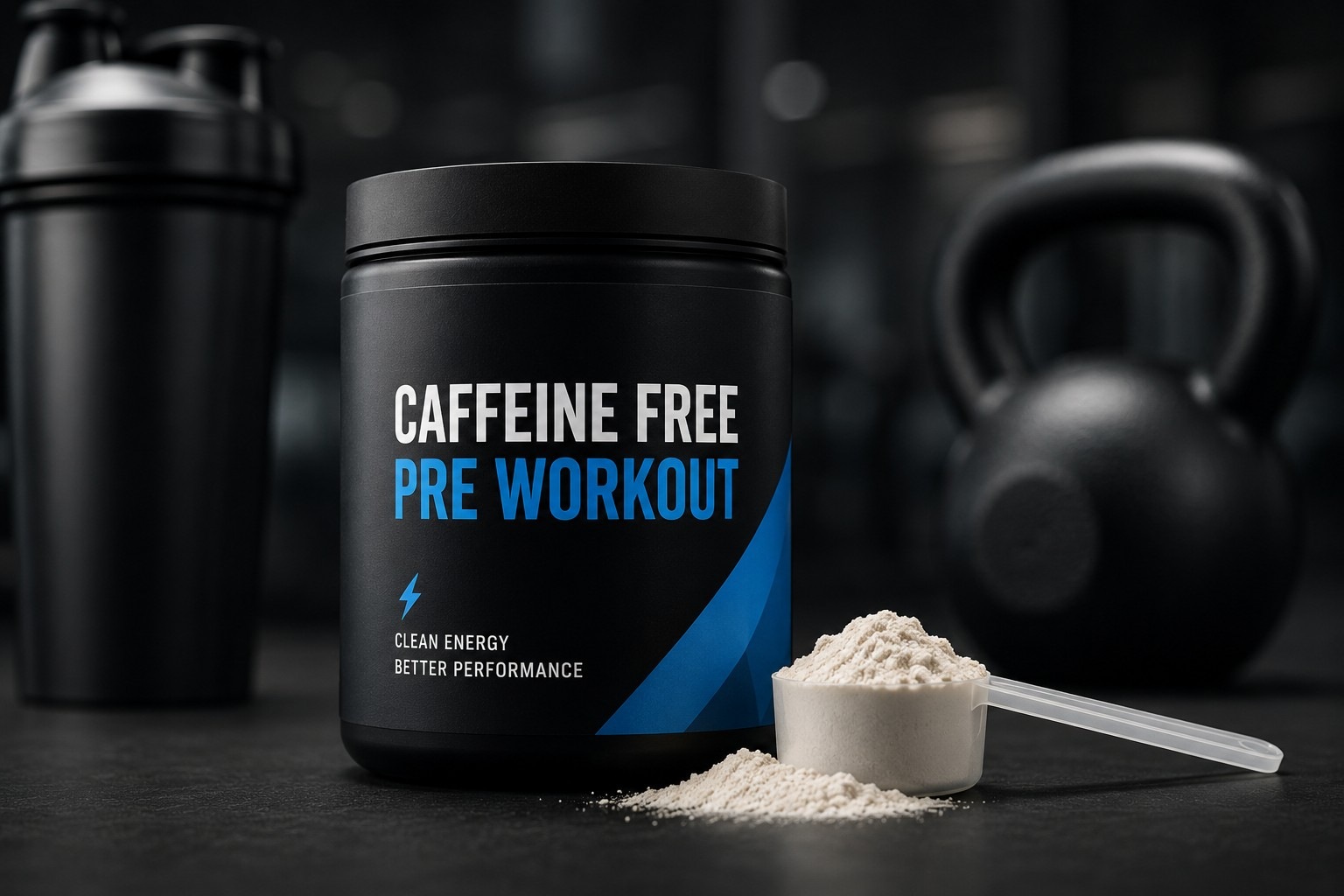
A caffeine free pre workout is a non-stimulant supplement that improves endurance, blood flow, strength, and focus without caffeine. It uses ingredients like L-Citrulline, Creatine, and Beta-Alanine to enhance workout performance without jitters or sleep disruption.
What Is a Caffeine Free Pre Workout?
- Walk into any supplement store — in Chicago or Bangalore — and you’ll find shelves lined with pre-workout tubs in bold colors. Most of them share one thing in common: they’re loaded with caffeine.Standard pre-workouts contain anywhere from 150mg to 400mg of caffeine per scoop.
For many people, that’s simply too much.
- That’s exactly why caffeine free pre workout supplements have become one of the fastest-growing categories in the supplement industry in 2025. These products — also called “stim-free” or “non-stimulant” pre-workouts — are specifically formulated to deliver every meaningful performance benefit of a pre-workout supplement without relying on caffeine or any other central nervous system stimulant.
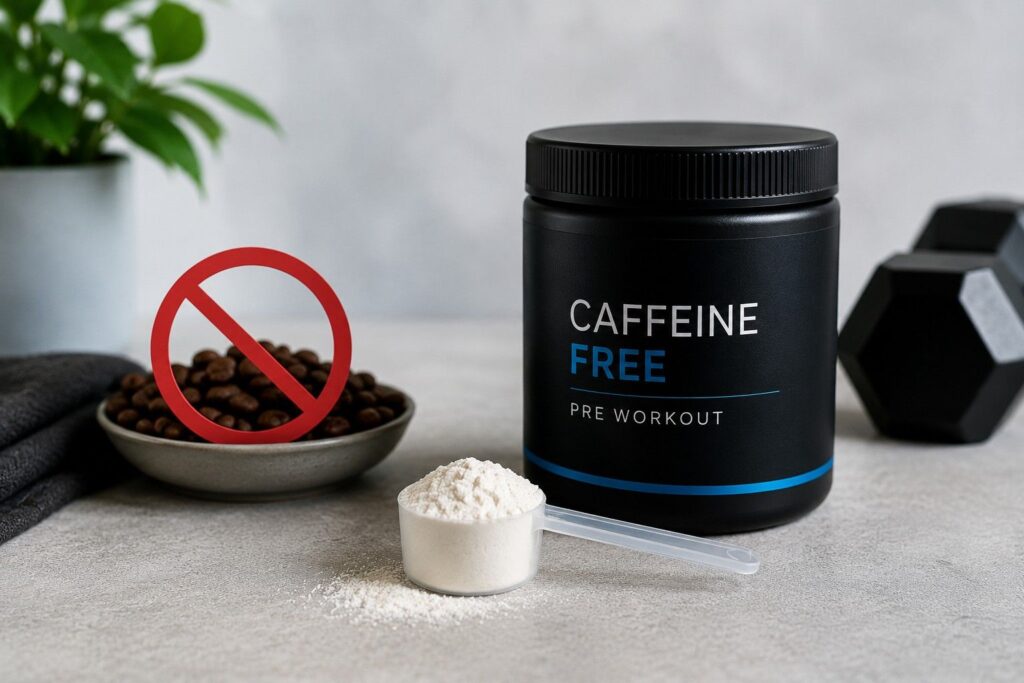
- “A 2018 review published in the Journal of the International Society of Sports Nutrition confirmed that these supplements can genuinely benefit muscular endurance and mood during training.”
How Does a Caffeine Free Pre Workout Actually Work?
- There’s a widespread misconception that caffeine is the performance enhancer in pre-workout supplements. It’s not. Caffeine is an alertness tool — it blocks adenosine receptors in your brain to reduce the feeling of tiredness, which helps you perceive your workout as less difficult. But the actual heavy lifting — the improved blood flow, the extended endurance, the increased strength output — comes from other compounds entirely.
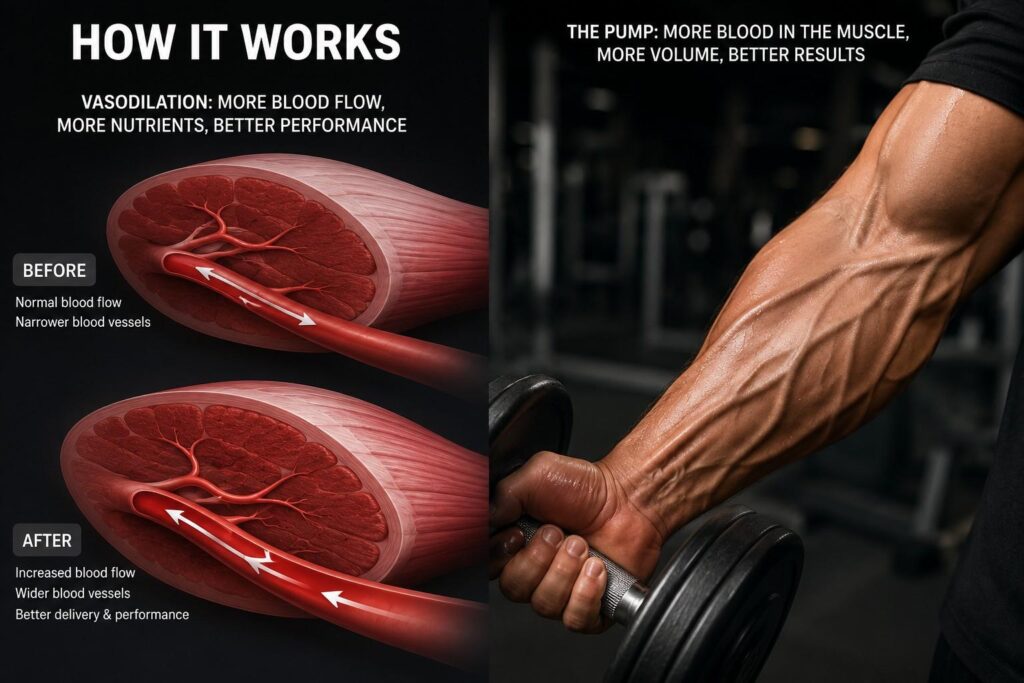
A caffeine free pre workout works through three primary physiological mechanisms, each targeting a different limiting factor during exercise:
1. Vasodilation and Blood Flow. Compounds like L-Citrulline are precursors to nitric oxide — a molecule your body uses to relax and widen blood vessel walls. When blood vessels dilate, more blood, oxygen, and nutrients rush to your working muscles. The result is what gym-goers call a “pump” — that tight, full feeling in the muscles during a hard set — but beyond aesthetics, it literally means your muscles are receiving more fuel to sustain effort longer.
2. Fatigue Buffering. During intense exercise, your muscles produce lactic acid faster than it can be cleared. The burning sensation you feel during a hard set is partly the result of this acid accumulation. Beta-Alanine works by increasing carnosine levels in muscle tissue — carnosine acts as a buffer against this acid, allowing you to maintain output before hitting that point of failure. This is why beta-alanine is so effective for anyone doing high-rep sets, HIIT, or endurance training.
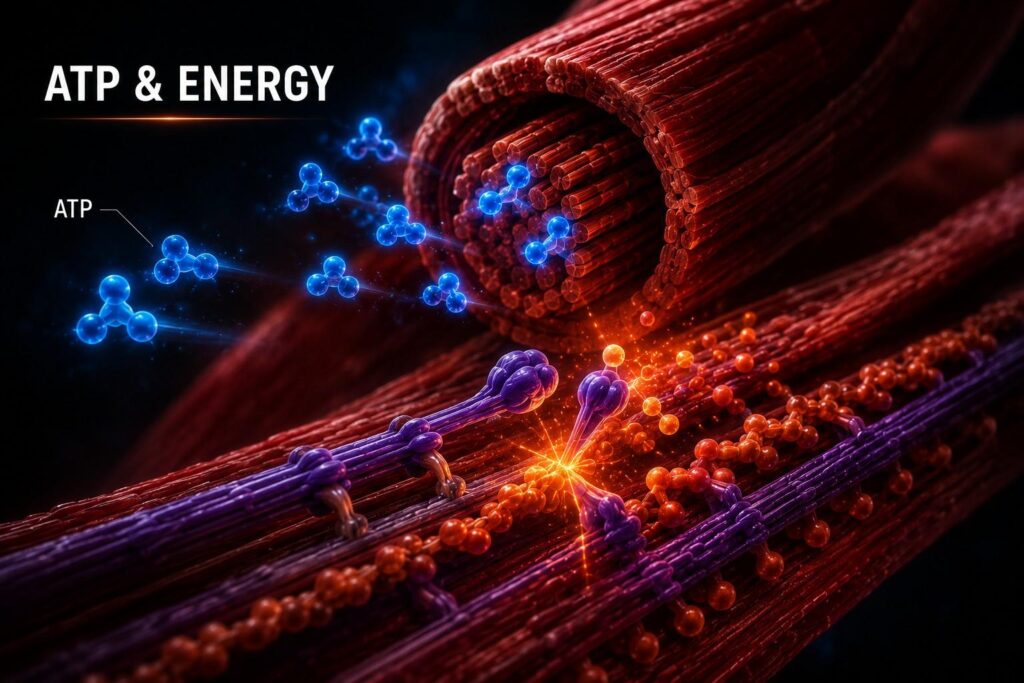
3. ATP Replenishment. Creatine Monohydrate works by increasing your muscles’ reserves of phosphocreatine — the compound used to rapidly regenerate ATP (adenosine triphosphate), your muscles’ direct energy currency for explosive contractions. More available ATP means stronger, faster contractions and a reduced rate of strength decline across a workout. Unlike caffeine, creatine actually fuels the mechanical process of muscle contraction at the cellular level.
ATP = your muscle’s direct energy source.
Beyond these three core mechanisms, well-formulated stim-free pre-workouts also include nootropic compounds like Alpha-GPC and L-Tyrosine, which support the brain’s production of acetylcholine and dopamine respectively — neurotransmitters that govern focus, coordination, and the mind-muscle connection. The result is mental sharpness and workout intensity without the overstimulated, anxious edge that high-caffeine products often create.
7 Key Ingredients in Caffeine Free Pre Workout and What They Do
Not all stim-free pre-workouts are created equal. The quality of a caffeine free pre workout formula depends entirely on which ingredients are included and — critically — at what doses. Many budget products include impressive-sounding ingredient lists but dose each compound at a fraction of what research shows to be effective. Here’s what you’re actually looking for, and why each ingredient earns its place in a serious formula.
01. L-Citrulline / Citrulline Malate
The Pump Ingredient
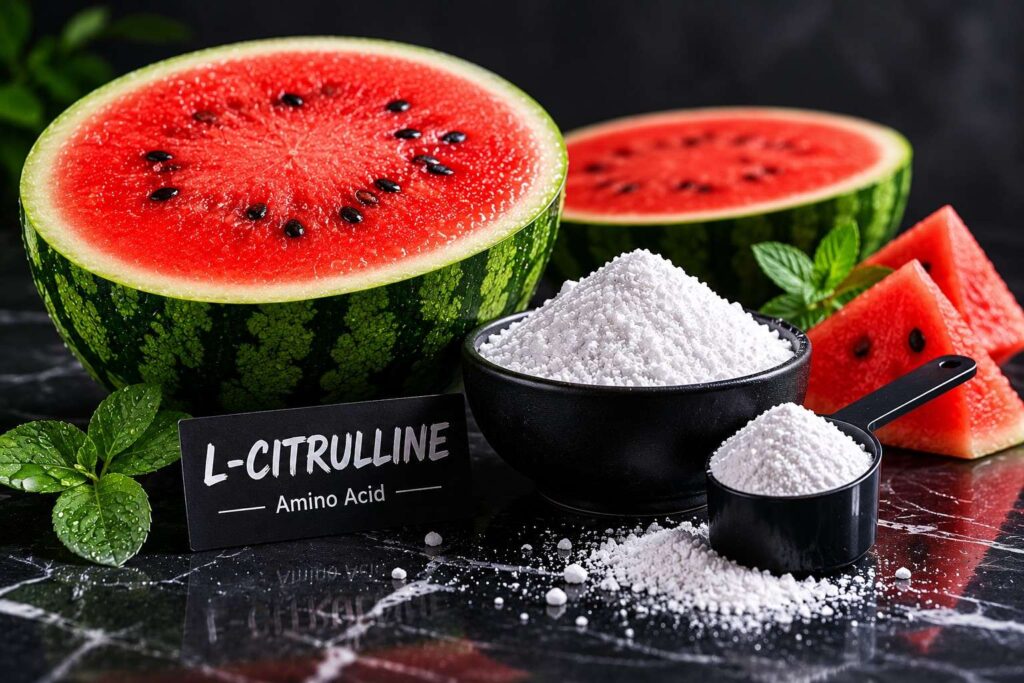
- L-Citrulline is the single most important ingredient in any caffeine free pre workout focused on performance. It’s an amino acid that your body converts into L-Arginine, which then triggers nitric oxide production — the molecule responsible for widening your blood vessels. More open blood vessels means more blood, more oxygen, and more nutrients reaching your working muscles in real time.
- Clinical studies using 6g of Citrulline Malate showed a significant reduction in feelings of fatigue, an increased rate of oxidative ATP production, and improved post-exercise recovery. A landmark cycling study found that L-Citrulline supplementation improved time trial performance by 1.5% and increased power-to-oxygen ratio — meaningful gains for any athlete. If your pre-workout has less than 6 grams on the label, the pump and endurance effect will be largely cosmetic.
Dosage tip: Look for 6,000–8,000mg of L-Citrulline OR 8,000–12,000mg of Citrulline Malate (which is a 2:1 ratio, so you need more to get the same active dose). These are not interchangeable gram-for-gram.
02. Beta-Alanine
The Endurance Buffer
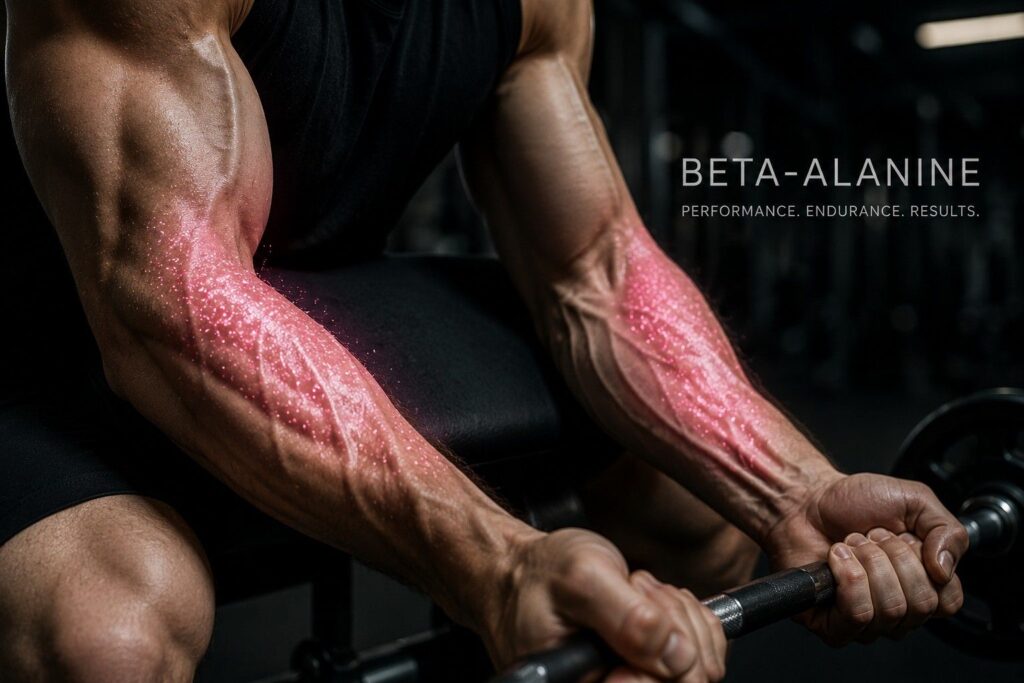
- Beta-Alanine is an amino acid that increases the concentration of carnosine in your muscle cells. Carnosine is your body’s natural buffer against the acid buildup that causes the burning sensation during intense exercise. By delaying the point at which muscles reach acidic failure, Beta-Alanine allows you to squeeze out more reps, sustain a higher pace for longer, and maintain power output through the end of a hard set.
- A 2025 systematic review combining data from multiple randomized controlled trials confirmed that Beta-Alanine co-supplementation enhances high-intensity exercise performance — particularly anaerobic power and repeated-bout performance. The research-backed dose is 3.2–6.4 grams daily. Many budget pre-workouts dose this at 1–2 grams, which produces the tingling sensation (see below) but provides minimal performance benefit.
About the tingling: Beta-Alanine causes a harmless tingling sensation on your skin called paresthesia — typically felt on the face, neck, and hands. It fades within 20–30 minutes and is completely safe. It is not an allergic reaction. Some people enjoy it as confirmation the ingredient is working; others find it uncomfortable. If it bothers you, look for a formula without Beta-Alanine — Gorilla Mode Nitric is a strong caffeine free option that omits it entirely.
03. Creatine Monohydrate
The Strength Compound
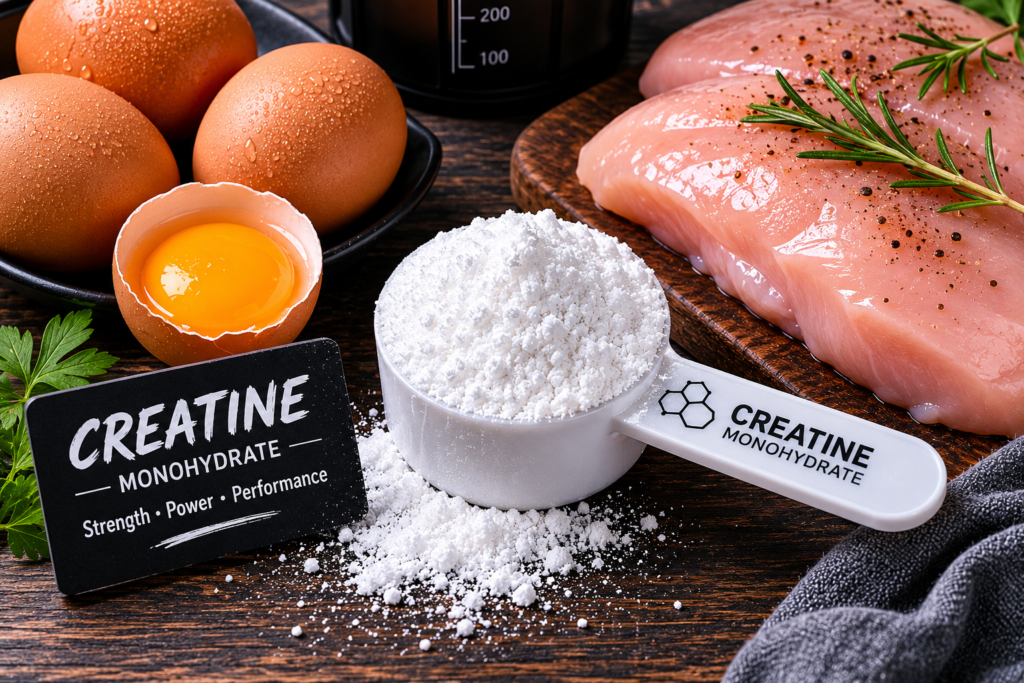
- Creatine Monohydrate is the most extensively researched performance supplement in existence.“According to the NIH Office of Dietary Supplements, creatine is one of the most researched sports supplements for strength and performance.” It works by replenishing phosphocreatine stores in your muscles — the compound that rapidly regenerates ATP during explosive contractions. More available ATP means harder contractions, more reps before failure, and faster recovery between sets.
- Research evidence for creatine is described by experts as “extremely well-established — more RCT data than any other ergogenic supplement.” Some stim-free formulas include creatine as part of their pre-workout blend, which is a genuine benefit. However, note that creatine accumulates in muscle tissue over weeks of consistent use — a single pre-workout dose won’t make a dramatic difference. Consistent daily intake of 3–5g is where the results compound. Interestingly, some research suggests that caffeine may actually inhibit creatine uptake — making a caffeine-free formula potentially more effective for creatine absorption.
Dosage tip: 3–5g daily, consistently. Loading phases (20g/day for 5–7 days) accelerate saturation but are not mandatory. The same endpoint is reached either way; loading just gets you there faster.
04. Betaine Anhydrous
The Power Output Booster
- Betaine (trimethylglycine) is a compound derived from beets that supports both power output and cellular hydration. It works by donating methyl groups in a process that supports creatine synthesis and reduces homocysteine — a metabolic byproduct linked to muscle damage. Multiple studies in strength-trained athletes show that 2.5g of Betaine per day improves bench press power, squat volume, and overall workout capacity.
- It pairs particularly well with Creatine, with many high-end stim-free formulas including both to cover both acute power output and long-term strength gains. It also acts as an osmolyte — helping muscles retain water and maintain cell volume under exercise-induced stress, which may contribute to the sense of muscle fullness and hardness during training.
05. Alpha-GPC
The Focus and Mind-Muscle Ingredient
- Alpha-GPC (alpha-glycerylphosphorylcholine) is a choline-containing compound that crosses the blood-brain barrier and increases acetylcholine levels in the brain. Acetylcholine is the neurotransmitter responsible for muscle contractions, motor learning, and the mind-muscle connection — that sensation of truly “feeling” the muscle you’re targeting during a lift.
- This is the closest a caffeine free pre workout gets to replicating the focus effect of a caffeinated product, but through a cleaner, more targeted pathway. Alpha-GPC enhances cognitive function, improves reaction time, and sharpens the mental drive to sustain effort through difficult sets. It’s particularly valued by athletes doing technical lifts — Olympic weightlifting, powerlifting, or any movement requiring precision — where mental clarity matters as much as physical output.
06. L-Tyrosine
The Stress-Resistance Amino Acid
- L-Tyrosine is an amino acid that serves as the direct precursor to dopamine, adrenaline, and noradrenaline — the neurotransmitters that govern motivation, alertness, and stress response. Under conditions of physical stress (like intense exercise), your brain’s catecholamine reserves deplete, which contributes to mental fatigue long before your muscles give out.
- L-Tyrosine supplementation helps replenish these reserves, maintaining cognitive sharpness and motivation throughout a demanding session. It’s particularly effective for people who train under high life stress — long work days, sleep debt, mental pressure — because those conditions also deplete the same neurotransmitter systems. Unlike caffeine-driven focus, L-Tyrosine-based focus feels smooth, clear, and controlled rather than anxious and forced.
07. Taurine + Electrolytes
The Hydration and Recovery Foundation
- Taurine is an amino acid with a surprisingly broad role in exercise performance. It supports cell hydration, nerve function, antioxidant defense, and electrolyte balance. During training, taurine helps regulate calcium levels inside muscle cells — calcium is directly involved in muscle contraction and relaxation, so optimal taurine levels mean smoother, less crampy contractions, particularly during long or high-volume sessions.
- Electrolytes (sodium, potassium, magnesium) are lost through sweat, and without adequate replacement, your body remains dehydrated at the cellular level even if you’re drinking plenty of water. Premium stim-free formulas include an electrolyte complex alongside taurine, making the supplement genuinely useful for rehydration and sustained performance — not just the initial workout phase. For users in India’s warm climate, this component is arguably more important than anywhere else.
Who Should (and Shouldn’t) Use Caffeine Free Pre Workout?
Caffeine free pre workout is not a niche product for a small group of edge-case users. A genuinely wide range of athletes and gym-goers benefit from going stim-free — and in many cases, the stim-free option is the smarter default regardless of caffeine tolerance.
✓ IDEAL FOR THESE USERS
- Evening trainers (6 PM or later)
- Anyone sensitive to caffeine — jitters, anxiety, heart palpitations
- People with high blood pressure or cardiovascular concerns
- Women — especially those with hormonal sensitivity to stimulants
- Beginners building consistent training habits
- Athletes cycling off high-caffeine products to reset tolerance
- Anyone who trains twice a day (morning + evening)
- People on medications that interact with stimulants
- Endurance athletes (marathoners, cyclists) needing sustained energy
- Users who prioritize recovery and sleep quality above all
✗ CONSIDER CAFFEINATED IF…
- You exclusively train early morning (6–9 AM)
- You handle caffeine well with zero side effects
- You need maximum immediate alertness and motivation
- You’re competing on race/competition day and need peak arousal
- You’re already in a period of excellent sleep and low stress
Many experienced athletes use a practical dual-formula approach: a caffeinated pre-workout for morning sessions when caffeine aligns with their natural cortisol peak, and a caffeine free pre workout for evening sessions when they want full training intensity without compromising their recovery sleep. This is arguably the most intelligent supplement strategy available — you get the benefits of both options, targeted to when they’re appropriate.
The Pro Strategy Nobody Talks About
Elite athletes don’t choose between caffeinated and caffeine free — they use both strategically. Caffeinated pre-workout for morning sessions and early competitions. Caffeine free pre workout for evening training and high-volume recovery weeks. Same intensity either way. Zero sleep disruption. This is the smart way to build a supplement stack.Timing
When Should You Take a Caffeine Free Pre Workout?
The ideal timing window for a caffeine free pre workout is 20–30 minutes before your training session begins. This is different from caffeinated pre-workouts, which peak faster because caffeine is rapidly absorbed. The key ingredients in a stim-free formula — particularly L-Citrulline — take slightly longer to reach peak plasma concentration, typically around 45–60 minutes after ingestion.
The practical approach: mix your pre-workout and start drinking it as you change into your workout gear or drive to the gym. By the time you finish your warm-up and begin your working sets, the ingredients will be at or near peak concentration in your bloodstream.
One of the significant advantages of the caffeine free format is that timing relative to bedtime is irrelevant. Since there is no caffeine — which has a 5–6 hour half-life in the body — a stim-free pre-workout taken at 9 PM has zero impact on your ability to fall asleep at 11 PM. Your cortisol isn’t artificially elevated, your heart rate isn’t raised by stimulant action, and your adenosine receptors aren’t blocked. You train hard. You finish. You recover normally. This is the fundamental value proposition that makes caffeine free pre workout indispensable for evening trainers.
On the question of daily use: unlike caffeinated formulas where daily use builds tolerance quickly and requires escalating doses to feel the same effect, a well-formulated stim-free pre-workout can be taken consistently without the same tolerance-building concern. Ingredients like L-Citrulline and Beta-Alanine actually benefit from consistent use — their effects in the body improve over weeks of supplementation as muscle carnosine accumulates and nitric oxide pathways become more responsive. A planned break of one to two weeks every two to three months is still a sensible practice, but it’s not the urgent necessity it becomes with high-caffeine products.
Caffeine Pre Workout vs. Caffeine Free Pre Workout: Full Comparison
The biggest difference between caffeinated and caffeine free pre workout is their mechanism of action — one works through your nervous system, the other works directly on your muscles and vascular system. Both can produce real results; the question is which approach fits your situation. Here’s the complete breakdown:
| Feature | Caffeinated Pre-Workout | Caffeine Free Pre-Workout |
|---|---|---|
| Primary Mechanism | Blocks adenosine receptors; stimulates CNS | Vasodilation, ATP replenishment, acid buffering |
| Energy Effect | Strong, fast-onset stimulant buzz | Sustained, smooth performance improvement |
| Sleep Impact | Significant — can disrupt sleep for 6+ hours | None — safe to use before evening sessions |
| Anxiety / Jitters | Common at high doses (200–400mg) | None — no CNS stimulation |
| Tolerance Build-Up | Rapid — effects diminish within weeks | Minimal — consistent effects over time |
| Crash After Workout | Yes — energy drop as caffeine clears | No post-workout energy crash |
| Muscle Pump | Moderate (citrulline in formula dependent) | Excellent (often higher citrulline doses) |
| Creatine Absorption | May be inhibited by caffeine | Optimal — no interference |
| Safe for Evening Use | ✗ Not recommended after 3–4 PM | ✓ Any time — even 9–10 PM |
| Safe for Daily Use | Not ideal — tolerance and dependency risk | ✓ Yes, consistently |
| Best For | Morning sessions, peak alertness needs, competition days | Evening training, sensitive users, recovery focus |
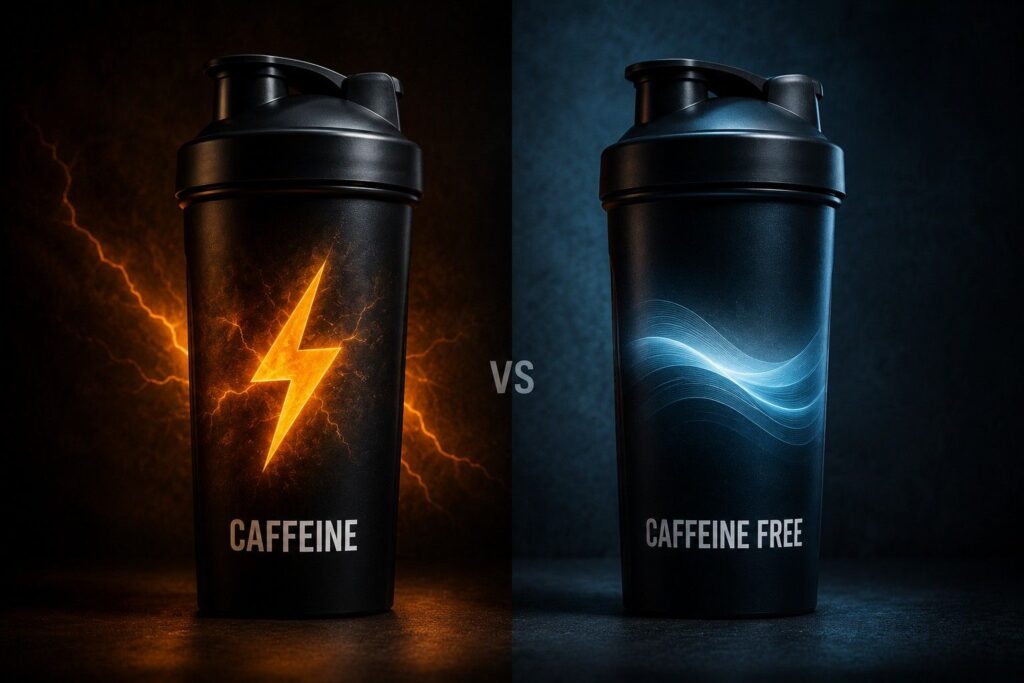
If you’re confused about which to choose, use this simple rule: if you train before 2 PM and have no caffeine sensitivity, either works. If you train after 4 PM or care about sleep quality, choose caffeine free. Recovery happens during sleep — and sleep is when 70% of muscle repair and growth hormone release occurs. Any supplement that compromises your sleep is ultimately working against your results, no matter how good the session felt.
Caffeine Free Pre Workout in India: What You Need to Know
🇮🇳 India-Specific Guidance
The Indian Fitness Market Is Different — Here’s Why It Matters for Stim-Free Supplements
India’s fitness supplement market has grown dramatically over the past three years, but the needs of Indian gym-goers are meaningfully different from those of a typical US consumer. If you’re training in Mumbai, Delhi, Bangalore, or Hyderabad, here’s what you need to know specifically about using caffeine free pre workout:
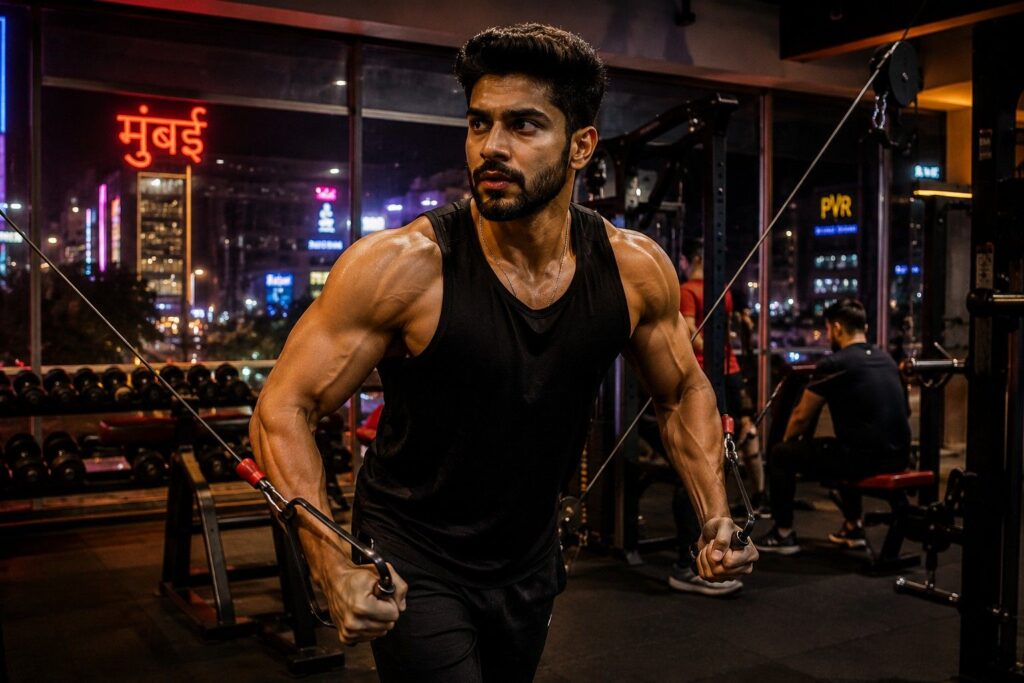
- Evening training culture is dominant: A large majority of Indian gym-goers train between 6–10 PM after work or college. Caffeine consumed at this time has a half-life of 5–6 hours, meaning it’s still circulating at significant levels at midnight — directly degrading sleep quality and, by extension, recovery and muscle growth. For India’s evening training culture, caffeine free pre workout isn’t just a preference; it’s the strategically correct choice.
- Heat and electrolyte loss: India’s warm, humid climate — particularly from March to October — means significantly higher sweat rates during training. This makes the electrolyte component of a stim-free pre-workout more important than in cooler climates. Prioritize formulas that include sodium, potassium, and taurine for hydration support. Drink a minimum of 3 liters of water on training days.
- Caffeine sensitivity on Indian diets: Vegetarian and plant-forward diets — common across many Indian states — tend to produce lower baseline caffeine tolerance. This means the same 200mg caffeine dose that a meat-eating American experiences moderately will often hit harder and last longer in a vegetarian Indian user. Stim-free formulas sidestep this entirely.
- FSSAI certification matters: When purchasing supplements in India, always look for FSSAI certification on domestic brands. For imported products, verify third-party testing certificates (NSF, Informed Sport). Read Indian-specific reviews, as ingredient quality and formulation practices can differ between the Indian and US markets even for the same brand.
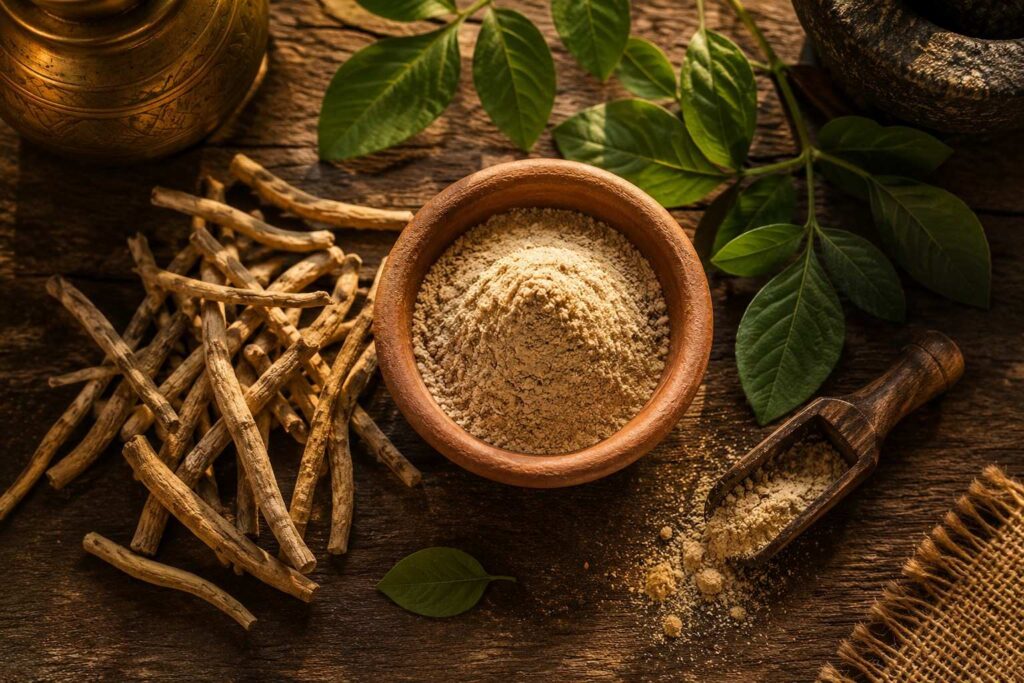
- Ashwagandha synergy: A growing number of Indian supplement brands combine stim-free pre-workout ingredients with Ashwagandha — an adaptogenic herb with strong research support for reducing cortisol, improving strength, and enhancing recovery. This combination is unique to the Indian market and scientifically sound for high-stress training environments.
5 Common Mistakes People Make With Caffeine Free Pre Workout
01
Buying an Under-Dosed Formula to Save Money
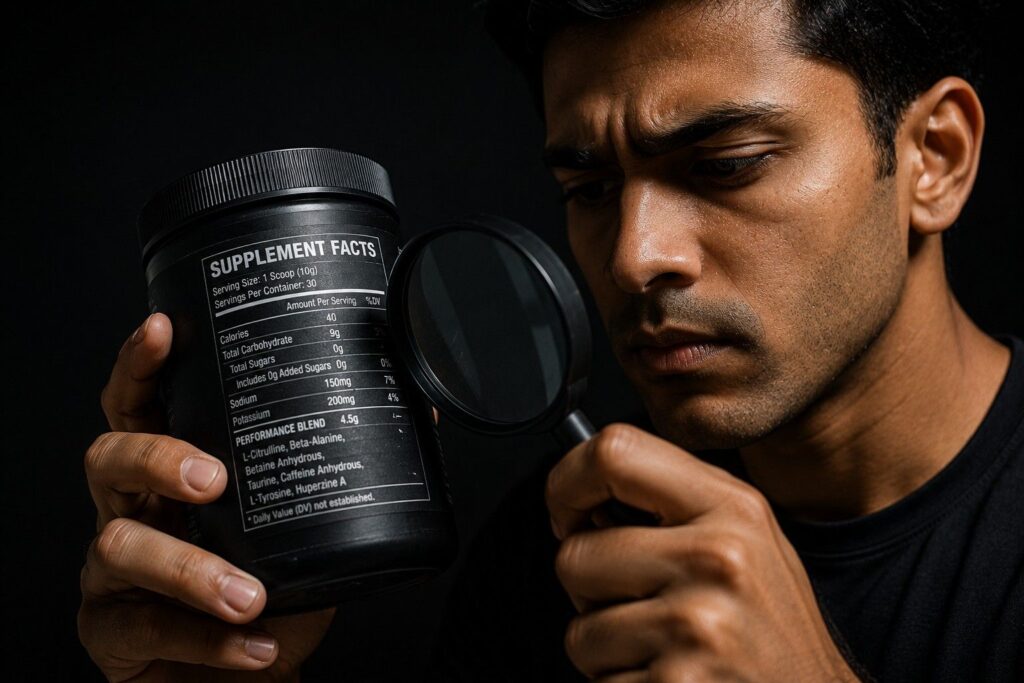
This is the single most common and costly mistake in the stim-free pre-workout category. Many budget products list impressive ingredients on the label — L-Citrulline, Beta-Alanine, Alpha-GPC — but dose each ingredient at a fraction of the clinically effective amount. A formula with 2g of Citrulline (instead of 6g) and 1g of Beta-Alanine (instead of 3.2g) is largely spending your money on flavoring and packaging. Always check the label for disclosed doses. If a product uses a “proprietary blend” without individual ingredient amounts, treat it with suspicion — that label structure is typically used to hide low dosing. The four non-negotiable doses are: L-Citrulline 6g+, Beta-Alanine 3.2g+, Creatine 3–5g, and Betaine 2.5g.
02
Assuming “Caffeine Free” Means “Stimulant Free”
This distinction matters more than most people realize. A product labeled “caffeine free” means exactly that — no caffeine. But it may still contain synephrine (from bitter orange extract), theobromine (from cocoa), hordenine, or yohimbine — all of which have stimulant effects on the central nervous system and can cause jitteriness, elevated heart rate, and sleep disruption. If your goal is truly stimulant-free training, read the complete ingredient list carefully and look for products explicitly labeled “stim-free” or “stimulant free” in addition to caffeine free.
03
Expecting Instant Results After One Serving
Caffeine works within 30–45 minutes and its effect is immediately obvious. Stim-free pre-workout ingredients work differently. Beta-Alanine’s full effect on muscle carnosine levels requires 4–6 weeks of consistent daily use. Creatine similarly requires weeks of accumulation before its performance benefits are maximized. L-Citrulline shows more immediate effects on pump and blood flow, but the full performance benefit is also stronger with regular use. Set a realistic expectation: in the first 1–2 sessions, you may notice improved pumps and blood flow. The full benefit stack — sustained endurance, strength improvement, better recovery — develops over 3–6 weeks of consistent use.
04
Taking It Without Adequate Hydration
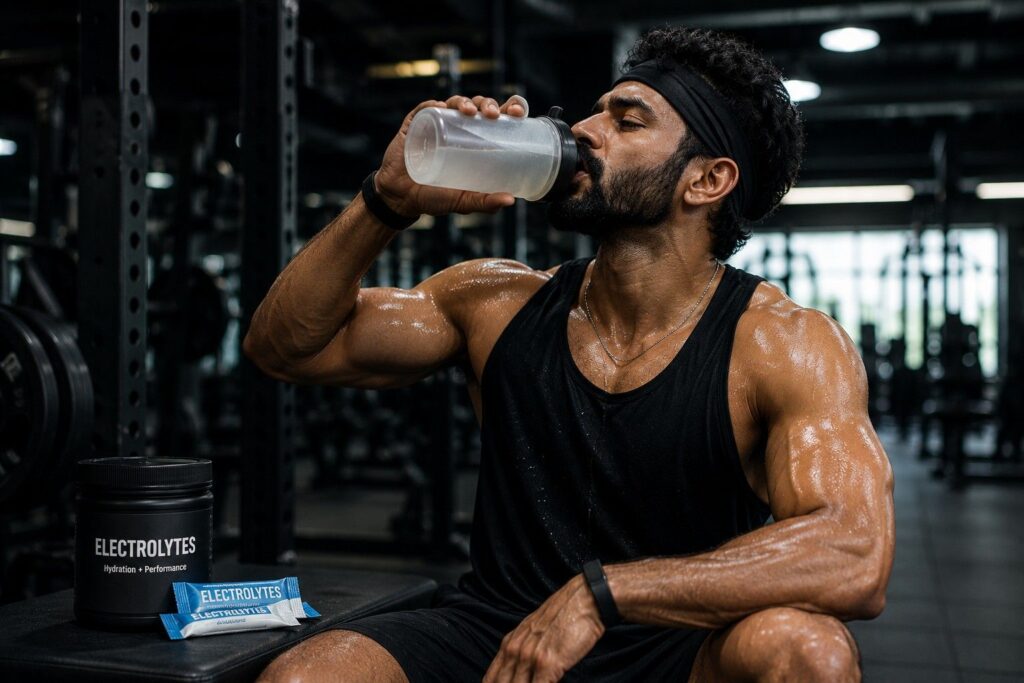
L-Citrulline drives vasodilation and increases blood flow, which amplifies your body’s water demand during training. Creatine also increases intramuscular water retention, requiring higher overall fluid intake. Taking a stim-free pre-workout without drinking adequate water before, during, and after your session can actually cause dehydration-related cramps and reduced performance — the opposite of what you’re paying for. Drink at least 500–750ml of water with your pre-workout, and continue hydrating throughout your session. If your formula includes electrolytes, even better.
05
Expecting It to Fix Poor Sleep, Bad Nutrition, or Inconsistent Training
This applies to all supplements, but it bears repeating in the context of a caffeine free pre workout specifically. When you remove the stimulant component, the supplement’s performance depends entirely on your baseline recovery. Stim-free pre-workout delivers its best results when sleep is consistent (7–9 hours), protein intake is adequate (1.6–2.2g per kg of body weight), and training is regular. Used as a crutch on top of poor sleep and inconsistent eating, its benefits are minimal. Used as a precision tool on top of solid fundamentals, it genuinely elevates your ceiling.
The Bottom Line
Do You Actually Need a Caffeine Free Pre Workout?
Honest answer: no supplement is a requirement. You can build an excellent physique, run a fast marathon, and perform at a high level with nothing but whole food, water, and hard training. But if you train consistently and want to optimize your results, a caffeine free pre workout is a genuinely useful tool — not a gimmick.
Here’s how to think about it by experience level:
If you’re a beginner: Focus on building training consistency and eating adequate protein first. If your training is irregular or your diet is poor, no supplement will move the needle meaningfully. Once you’re training 3+ times per week with a reasonable diet in place, a stim-free pre-workout can enhance individual sessions and accelerate the rate at which your foundational habits pay off.
If you’re an intermediate lifter: This is where stim-free pre-workout shines most clearly. You understand your body, you have established training habits, and you’re hitting limits that performance ingredients can genuinely help push through. The combination of L-Citrulline for better pumps and blood flow, Beta-Alanine for extended endurance, and Creatine for strength gains is a proven stack that complements consistent, intelligent training.
If you’re an advanced athlete: You’re likely already using some form of pre-workout. The question becomes whether a caffeine free format serves your schedule better — particularly for evening sessions, double training days, or competition preparation phases where sleep quality is a strategic priority. For serious athletes, managing caffeine strategically is as important as managing training load.
For both USA and India markets, the best value-per-rupee or value-per-dollar approach to stim-free supplementation remains the same: start with a formula that includes clinical doses of L-Citrulline, Beta-Alanine, and Creatine at disclosed amounts, from a brand with transparent labeling and third-party testing. Everything else is a refinement on that foundation.
Frequently Asked Questions
1. Does caffeine free pre workout actually work without caffeine?
Yes — and the evidence is robust. A review of 80 studies in the Journal of the International Society of Sports Nutrition confirmed that pre-workout supplements can genuinely benefit muscular endurance and mood during training. The performance effects are driven by non-stimulant ingredients — L-Citrulline for blood flow, Beta-Alanine for fatigue buffering, and Creatine for ATP replenishment — all of which work completely independently of caffeine. The key is finding a formula with clinical doses of each ingredient rather than a product that uses these names as window dressing at ineffective amounts.
2. When is the best time to take a caffeine free pre workout?
20–30 minutes before training is the ideal window. L-Citrulline — the primary pump and blood flow ingredient — peaks in plasma around 45–60 minutes after ingestion, so mixing your pre-workout during warm-up means you’ll hit your working sets right at the ingredient’s peak concentration. Unlike caffeinated products, there is no risk of taking it too late in the day — a stim-free formula at 9 PM has zero impact on your ability to sleep at 11 PM.
3. Can I take caffeine free pre workout every day?
Yes, and in many ways daily use is actually beneficial. Beta-Alanine’s effect on muscle carnosine levels builds up over weeks of consistent dosing, and Creatine requires ongoing daily intake to maintain elevated muscle stores. Unlike caffeine — where daily use quickly builds tolerance and requires escalating doses — the performance effects of stim-free ingredients remain consistent or improve with regular use. A planned break of 1–2 weeks every 2–3 months is still sensible practice, but daily use is not the concern it is with high-caffeine formulas.
4. What is the tingling sensation I feel from pre workout without caffeine?
That tingling — called paresthesia — is caused by Beta-Alanine, not caffeine. When Beta-Alanine enters the bloodstream, it activates sensory nerve receptors just beneath the skin, creating a harmless pins-and-needles sensation that typically affects the face, neck, upper chest, and hands. It fades within 20–30 minutes and is completely safe. It is not an allergic reaction, and it does not indicate the product is causing harm. For users who dislike the sensation, choosing a stim-free pre-workout without Beta-Alanine (such as Gorilla Mode Nitric) is the solution.
5. Is caffeine free pre workout safe in India’s summer heat?
Yes — and it’s arguably safer than caffeinated pre-workout during India’s summer months. Caffeine is a mild diuretic and increases cardiovascular strain, both of which compound the dehydration risk in hot, humid conditions. A stim-free formula avoids these effects. That said, India’s heat significantly increases sweat rate and electrolyte loss during training. On hot training days, drink at least 3 liters of water, look for a formula with an electrolyte complex, and consider adding a pinch of pink salt to your water bottle if cramps are a recurring issue.
6. Can caffeine free pre workout be taken without other supplements?
Generally yes, and many athletes stack stim-free pre-workout with other core supplements effectively. The most common and well-supported combination is stim-free pre-workout + whey protein post-workout + standalone creatine (if your pre-workout doesn’t already include it). This covers performance, pump, endurance, and recovery in one clean stack. If you’re also taking Ashwagandha for stress and recovery, it pairs well — Ashwagandha’s adaptogenic effects complement the training performance effects of a stim-free formula without any known negative interactions.
7. Which ingredients should I avoid in a “caffeine free” pre workout?
Watch for hidden stimulants that can appear in caffeine-free products: synephrine (from bitter orange), theobromine (from cocoa extract), hordenine, yohimbine, and DMAA (which is banned in many countries and has been linked to serious cardiovascular events). Also be cautious of products with “proprietary blends” that don’t disclose individual ingredient amounts — this label format is a common way to hide under-dosed formulas. Stick to brands that list every ingredient and every dose clearly on the label.
Final Takeaway
The Right Tool, Used Right
- Caffeine free pre workout is not a compromise. It’s a precision supplement that works at the muscular and vascular level — improving blood flow, extending endurance, increasing strength output, and sharpening focus — through mechanisms that are independent of stimulant arousal and completely compatible with quality sleep and recovery.
- If you train in the evening, if caffeine makes you anxious or disrupts your sleep, if you want to use creatine at its full effectiveness, or if you simply want a supplement that makes you feel better the day after training rather than worse — the stim-free format is your answer.
- Start with a formula that discloses clinical doses of L-Citrulline (6g+), Beta-Alanine (3.2g+), and Creatine (3–5g). Train consistently. Sleep well. The results will follow.
- Stim-Free Supplement Guide · 2025

For more insights, explore our other blogs: https://coresuppliments.com/what-is-pre-workout-and-post-workout/, https://coresuppliments.com/best-pre-workout-foods/

 Admin
Admin