 Admin
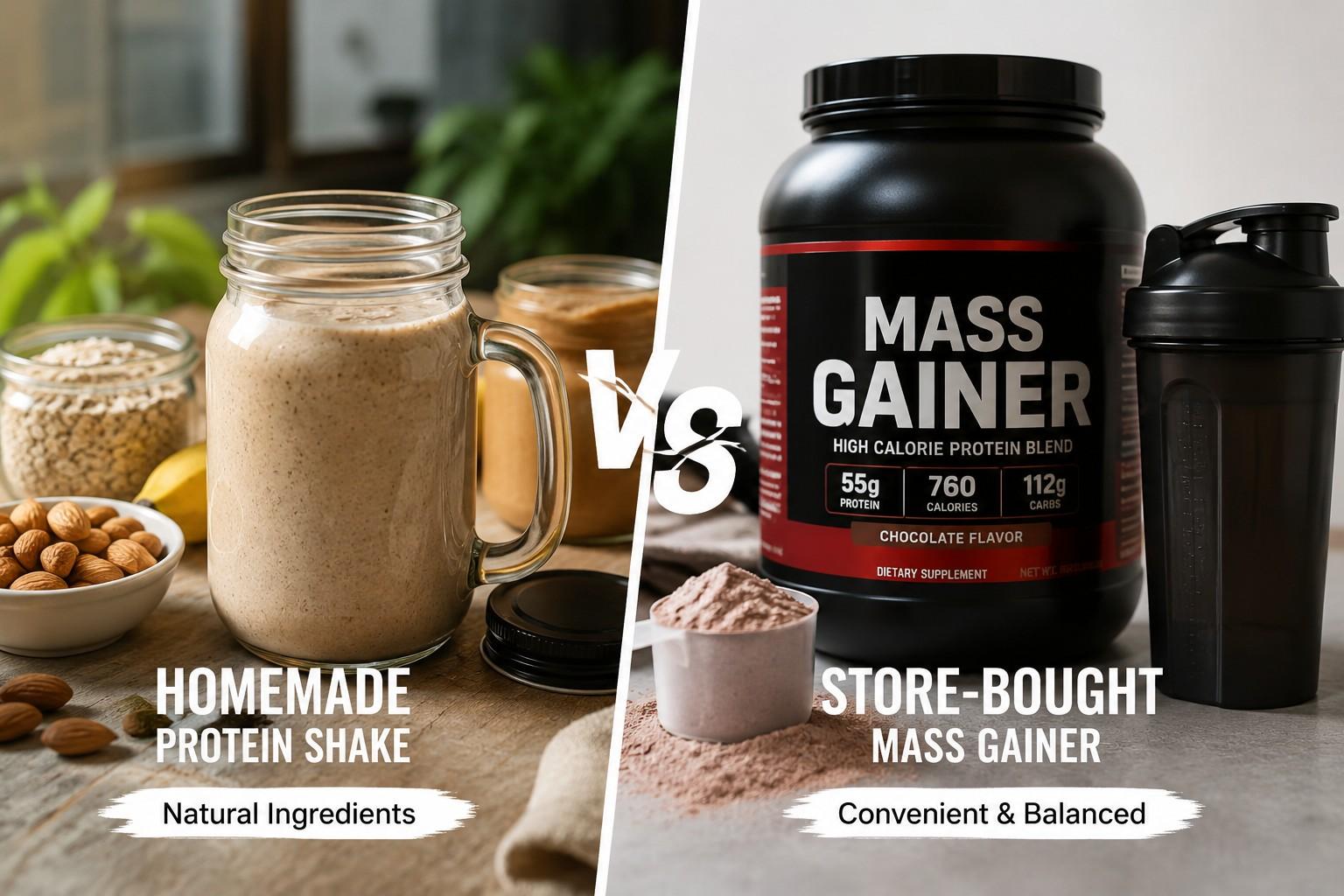
Admin So you’ve decided to bulk up. You’re hitting the gym consistently, eating more than you used to, and now you’re staring at two options — a glossy tub of commercial mass gainer sitting on the shelf at your local supplement store, or a DIY recipe your gym buddy swore by. Both claim to pack on size. Both cost money (one just more obviously than the other). And honestly? Most articles online either push you toward buying something or give you a generic recipe without telling you why it works.
This article is different. We’re going to break down the homemade mass gainer vs store bought debate in a way that actually makes sense for your body, your budget, and your lifestyle — especially if you’re living in India where both options look very different from what fitness influencers in the US are showing you.
Let’s get into it.
What Is a Mass Gainer, Really?
Before comparing anything, let’s be clear about what mass gainers are supposed to do. A mass gainer is a high-calorie supplement — usually a shake or powder — designed to help people who struggle to consume enough calories through food alone. We’re talking about hardgainers, skinny guys, and anyone in a serious bulking phase who needs 3,000–5,000+ calories per day to see the scale move.
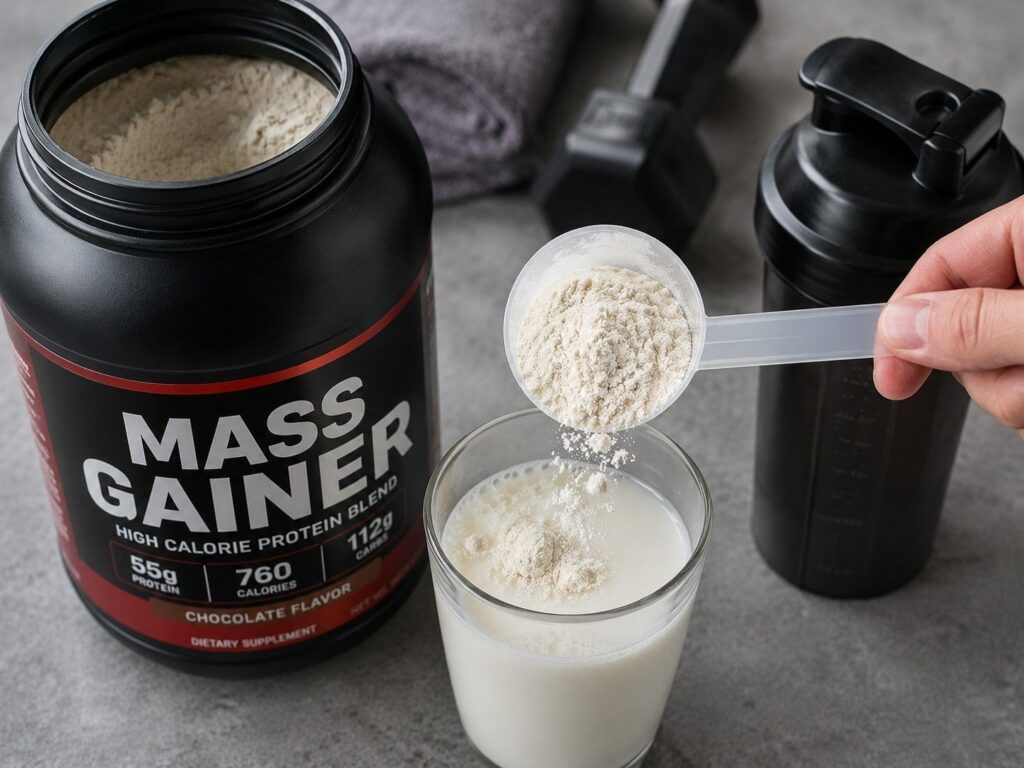
The core formula is simple: high carbohydrates + moderate protein + some fats = calorie surplus = weight gain.
Where it gets complicated is the source of those macros. And that’s exactly where the homemade vs store bought comparison starts to matter.
“A quick note before we go further — mass gainer and weight gainer are often used interchangeably, but they’re not exactly the same thing. If you want the full breakdown, read Mass Gainer vs Weight Gainer: 9 Key Differences.”
Store Bought Mass Gainers: What’s Actually Inside
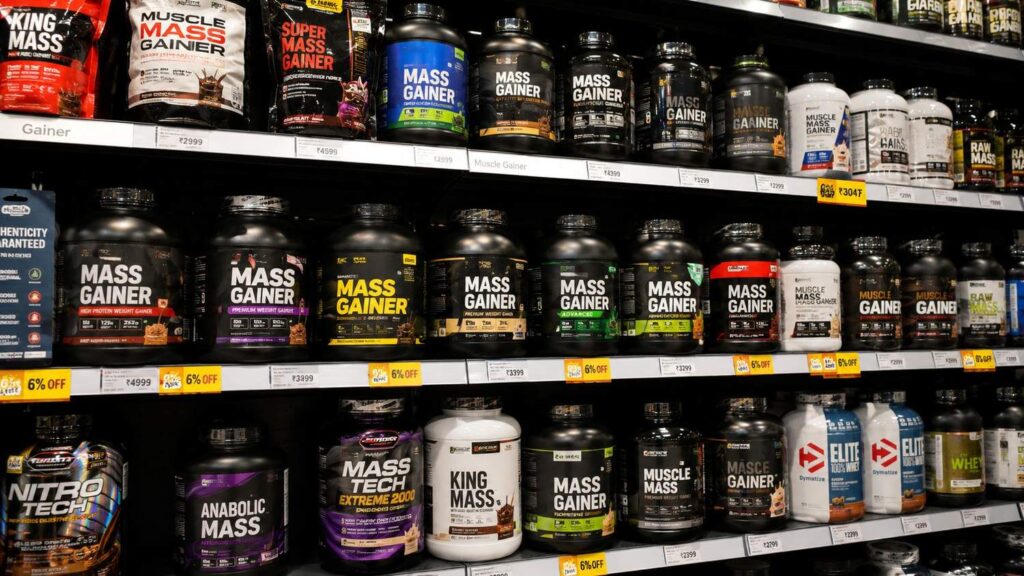
Walk into any supplement store — be it GNC, Nutrabay, or your local gym protein shop — and you’ll find brands like Optimum Nutrition Serious Mass, MuscleBlaze Super Gainer XXL, Endura Mass, or BSN True Mass. They all have impressive-looking labels with big calorie numbers. But what are you actually getting?
1. The Carbohydrate Source Matters More Than You Think
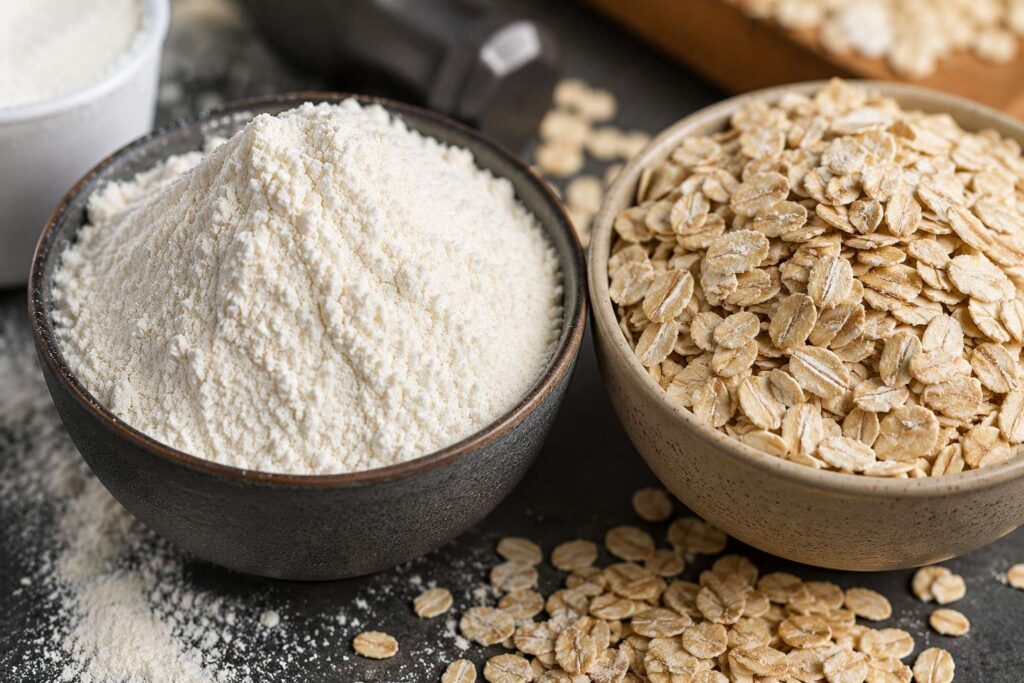
Most commercial mass gainers use maltodextrin as the primary carb source. Maltodextrin is a processed carbohydrate derived from corn, rice, or potato starch. It has an extremely high glycemic index — often higher than table sugar — which means it spikes your blood sugar rapidly.
For someone trying to add muscle mass while training hard, this isn’t always the worst thing. Post-workout, your muscles are glycogen-depleted and a fast carb can help with recovery. But if you’re drinking this shake sitting on your couch, that blood sugar spike is mostly going to fat storage. Maltodextrin also has very little nutritional value beyond calories. No fiber, no micronutrients, nothing.
Some premium products use oat powder or waxy maize instead, which are slower-digesting carbs. But these are usually in the more expensive range, and honestly, you could just eat actual oats.
2. Protein Quality Varies Wildly
The protein blend in commercial gainers is often a mix of whey concentrate, whey isolate, and sometimes casein or egg albumin. The ratio matters. A product heavy on whey concentrate will have a decent amino acid profile but also more lactose — which causes bloating and digestion issues in a lot of Indian people, who statistically have higher rates of lactose sensitivity.
The amount of protein per serving also tends to look better on paper than in practice. A “serving” on many products is 3–4 scoops, and the protein-to-carb ratio often leans 1:5 or even 1:8 (meaning for every 1g of protein, there’s 5–8g of carbs). That’s fine for a hardgainer, but it also means you’re consuming a lot of fast carbs.
3. Additives, Fillers, and Artificial Ingredients
Most commercial mass gainers contain artificial flavors, sucralose or acesulfame potassium (artificial sweeteners), food coloring, and preservatives to extend shelf life and improve taste. Some products also contain “proprietary blends” where you don’t know the exact dosage of each ingredient.
None of this is necessarily dangerous in small amounts. But if you’re drinking 2–3 servings a day, you’re putting a significant amount of processed, artificial ingredients into your body daily.
“If you want a complete breakdown of what these additives and excess calories can do to your body long term, check out our detailed guide: 13 Mass Gainer Side Effects You Must Know“
4. The Cost Breakdown
Let’s be real. A quality commercial mass gainer in India costs anywhere from ₹1,800 for a small tub to ₹6,000–₹8,000 for a large 5kg bag. That might last you 20–30 days at recommended servings. Per month, you’re spending ₹1,800 to ₹6,000+ just on one supplement.
Homemade Mass Gainers: Building Your Own Calorie Bomb
Now here’s where things get genuinely interesting. A well-made homemade mass gainer doesn’t just match a commercial product — it can absolutely destroy it in terms of nutritional value, ingredient quality, and cost-effectiveness.
1. You Control Every Single Ingredient
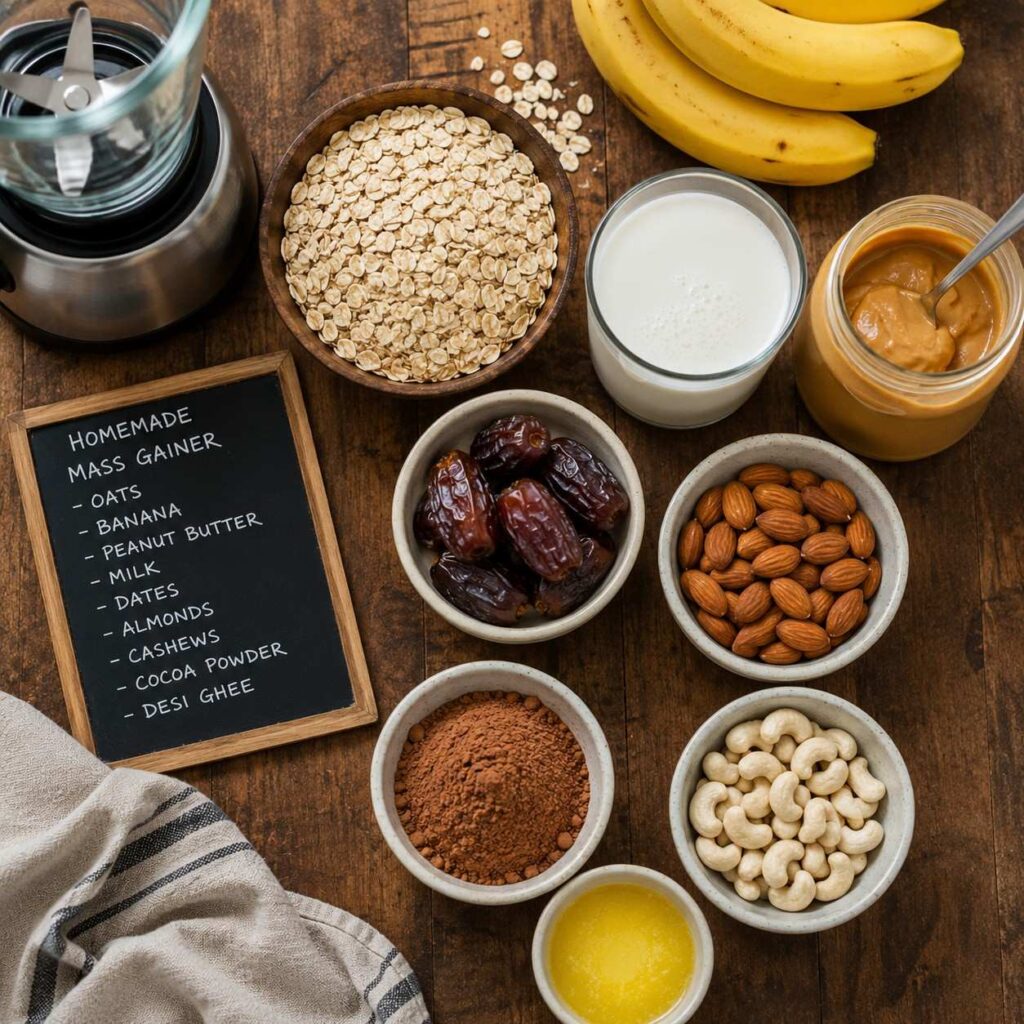
This is the biggest advantage, full stop. When you make your own mass gainer shake, you know exactly what’s going in. No artificial sweeteners, no mystery proprietary blends, no fillers. You choose your protein source, your carb source, your fat source, and your flavor. That’s it.
2. Real Food Ingredients and Their Actual Benefits
Here’s a breakdown of the best ingredients for a homemade mass gainer and why each one earns its place:
Whole Oats (Rolled Oats / Dalia)
Oats are one of the best carbohydrate sources you can use in a homemade gainer. They’re slow-digesting, high in fiber, and rich in beta-glucan, which supports heart health and keeps you full for longer. In India, you can get good quality rolled oats for ₹80–₹150 per kg. One 100g serving gives you around 370 calories, 66g carbs, and 13g protein.
Whole Milk (Full Fat Milk)
Full-fat buffalo or cow’s milk is a nutritional powerhouse. Per 250ml glass, you’re getting around 150–165 calories, 8g protein, 12g carbs, and 8g fat — along with calcium, vitamin D (in fortified versions), and B vitamins. In India, buffalo milk is widely available and has even higher fat content, making it ideal for bulking.
Bananas
One medium banana gives you around 90–100 calories, 23g of fast-digesting carbs, and potassium — which is critical for muscle contraction and preventing cramps. Bananas also make shakes taste naturally sweet without adding any sugar. They’re also one of the cheapest foods in India, at ₹20–₹40 per dozen.
Peanut Butter
Natural peanut butter (just peanuts, no added sugar or hydrogenated oils) is an incredible calorie-dense ingredient. Two tablespoons add about 190 calories, 8g protein, 16g fat, and 6g carbs. Peanuts are also rich in niacin, magnesium, and resveratrol. Brands like My Fitness or Alpino offer natural peanut butter in India at ₹300–₹500 for 1kg.
Whey Protein (Optional Add-in)
If you want to boost the protein content of your homemade shake, adding a scoop of basic whey protein concentrate is the cleanest way to do it. You’re already spending less on commercial mass gainers, so allocating some of that budget toward a quality whey powder makes sense. One scoop (30g) typically adds 22–25g protein and 120–130 calories.
Eggs
Eggs are the most complete protein source available. Two whole eggs add about 140 calories, 12g protein, and 10g fat. If you’re not adding them raw (not recommended), you can make a quick scramble and blend it in or eat it alongside your shake.
Greek Yogurt
Hung curd is essentially desi Greek yogurt — thick, strained, and protein-rich. 100g gives you around 10–12g protein and provides probiotics for gut health. If you have digestive issues with whey, replacing it with hung curd is a genuinely smart move.
Dry Fruits — Dates, Almonds, Cashews
Dates are nature’s fast carb — each date gives you about 20 calories of pure natural sugar. Almonds and cashews add healthy fats, vitamin E, and magnesium. A small handful of mixed dry fruits can add 100–200 calories to any shake.
Cocoa Powder
Unsweetened cocoa powder adds antioxidants (flavonoids), a rich chocolate flavor, and some natural mood benefits. It’s also very cheap — ₹100–₹200 for a 200g tin that lasts months.
Desi Ghee
A teaspoon of pure ghee adds about 45 calories of healthy saturated fat. It’s also rich in fat-soluble vitamins (A, D, E, K) and butyrate, which supports gut lining integrity. It’s a very Indian way to add calorie density without any processed ingredients.
Comparison: Homemade vs Store Bought at a Glance
| Feature | Homemade Mass Gainer | Store Bought Mass Gainer |
|---|---|---|
| Calorie control | Full control | Fixed per serving |
| Protein quality | Variable (customizable) | Pre-determined blend |
| Carb source | Oats, banana, dates (whole food) | Mostly maltodextrin |
| Additives | None (you control it) | Artificial flavors, sweeteners |
| Digestibility | Generally better | Can cause bloating |
| Cost (monthly) | ₹800–₹1,500 | ₹1,800–₹6,000 |
| Convenience | Requires prep | Ready to mix |
| Shelf life | 1–2 days (refrigerated) | 6–12 months |
| Micronutrients | High (from real food) | Low (mostly empty calories) |
| Beginner-friendly | Moderate (needs some knowledge) | Very easy |
Common Mistakes Beginners Make
1. Not Tracking Total Calories
Whether you go homemade or store bought, if you’re not in a calorie surplus, you won’t gain weight. Period. Many beginners assume drinking a mass gainer shake automatically equals weight gain. It doesn’t. You need to count your total daily calories and make sure you’re consistently eating more than you burn.
Use a free app like MyFitnessPal to log everything. Aim for 300–500 calories above your TDEE (Total Daily Energy Expenditure) for a lean bulk, or 500–700+ for an aggressive bulk.
2. Using Mass Gainers as a Meal Replacement
Mass gainers — homemade or store bought — should be treated as supplements to your diet, not replacements for real meals. If you’re skipping meals and just drinking shakes, you’re missing out on fiber, micronutrients, and the satiety that whole food meals provide.
3. Ignoring Protein Distribution
Your body can only synthesize a certain amount of protein per sitting for muscle building purposes — research suggests around 0.4g per kg of bodyweight per meal is roughly optimal. Chugging 100g of protein in one shake while neglecting other meals is not how muscle building works. Spread your protein intake across 3–5 meals throughout the day.
4. Buying the Cheapest Store-Bought Option Available
This one stings. In India, there’s a huge market for cheap, adulterated supplements. Several brands have been caught using low-quality protein sources, misrepresenting nutrition labels, or adding fillers like sugar and maltodextrin under misleading names. Always buy from trusted sources and check for third-party testing or FSSAI certification.
“And if you’re someone who’s skipping the gym altogether but still drinking shakes regularly, that’s a separate issue worth understanding — read Can I Take Mass Gainer Without Workout?“
Who Should Choose What?
Go with a store-bought mass gainer if:
- You have zero time to prep shakes from scratch
- You travel frequently and need the convenience of a scoop-and-mix product
- You’re a complete beginner who hasn’t established any nutrition habits yet
- You’ve verified the brand is reputable and the label is accurate
Go with a homemade mass gainer if:
- You want maximum nutritional value for your money
- You have even mild digestive sensitivity to whey or artificial ingredients
- You want to eat clean and know exactly what goes into your body
- You have 5–10 minutes in the morning to throw things in a blender
A Simple Homemade Mass Gainer Recipe for Indian Users
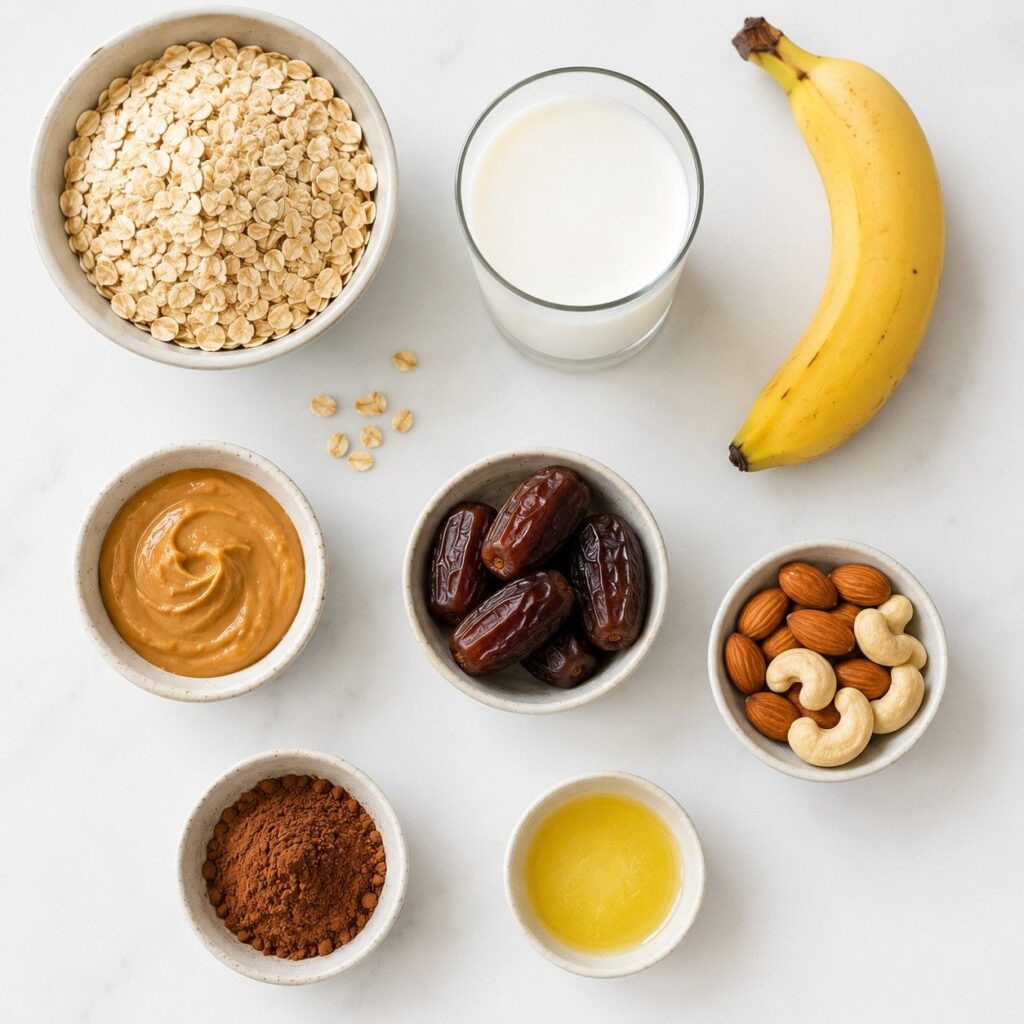
Here’s a base recipe that’s been designed specifically for Indian kitchens:
The Desi Bulk Shake
- 300ml full-fat milk (buffalo milk preferred)
- 1 medium banana
- 4 tablespoons rolled oats
- 2 tablespoons natural peanut butter
- 1 scoop whey protein (optional)
- 1 teaspoon desi ghee
- 2–3 dates (remove seeds)
- 1 tablespoon cocoa powder (unsweetened)
- A pinch of cinnamon
Blend everything together. You can add crushed ice in summer or drink it warm by replacing ice with a slightly warm milk. This shake comes out to approximately 650–750 calories, 35–40g protein (with whey), 75–85g carbs, and 22–28g fats. Clean, whole-food, affordable, and delicious.
What Trusted Sources and Research Say
The International Society of Sports Nutrition (ISSN) has published position stands noting that total caloric intake is the primary driver of weight gain, with protein quality and distribution playing important secondary roles. The ISSN also notes that whole food protein sources typically come with additional beneficial nutrients compared to isolated processed sources.
A 2020 review published in the Journal of the International Society of Sports Nutrition found that carbohydrate source and glycemic index do matter for body composition — slow-digesting carbohydrates like oats were associated with better fat-to-muscle gain ratios compared to high-GI refined carbs, especially when consumed outside the post-workout window.
Dr. Jose Antonio, co-founder of the ISSN, has noted in multiple interviews that for most natural athletes, real food-based nutrition approaches tend to outperform heavily processed supplements across most metrics except convenience.
FAQs
Q1. Can a homemade mass gainer really match the calories of a store-bought one?
Absolutely. The Desi Bulk Shake recipe above hits 650–750 calories per shake. Commercial mass gainers typically provide 600–1,200 calories per serving depending on the brand. By adding more oats, milk, or peanut butter, you can easily push a homemade shake past 1,000 calories.
Q2. Is it safe to drink raw eggs in a homemade mass gainer?
It’s generally not recommended because raw eggs carry a risk of Salmonella contamination and also contain avidin, which blocks biotin absorption. Cook your eggs or use pasteurized eggs if you want to include them.
Q3. How many times a day should I drink a mass gainer shake?
One to two shakes per day is typically sufficient. Most of your calories should still come from whole food meals. Use shakes to fill caloric gaps — between meals or post-workout — not as your primary food source.
Q4. Which Indian store-bought mass gainer is actually worth buying?
MuscleBlaze Super Gainer XXL and Endura Mass are among the more transparently labeled options available in India. Always buy from authorized dealers (Nutrabay, HealthKart, or brand official websites) to avoid counterfeits.
Q5. Can I make a homemade mass gainer without a blender?
Yes. You can mash bananas and mix them with warm milk, oats, peanut butter, and dates manually. It won’t be as smooth, but it works just as well nutritionally.
Conclusion: Make a Smart Choice, Not Just a Convenient One
Store-bought mass gainers win on one thing only — convenience. When it comes to ingredient quality, digestibility, cost, and control over what you’re consuming, homemade wins almost every time.
Quick recap to act on today:
- Track your calories first — no shake works without a surplus
- Try the Desi Bulk Shake before spending ₹4,000+ on a tub
- Use store-bought only when convenience genuinely matters (travel, no time)
- Never skip strength training while bulking
- Check FSSAI certification if buying commercial brands
- Spread protein across meals, don’t dump it all in one shake
The best mass gainer is the one you’ll actually use consistently. Build your food foundation first, fill the gaps with supplements — homemade or store-bought — and stay consistent. That combination beats any single product on the shelf.

 Admin
Admin