 Admin
Admin If you’ve just started hitting the gym and every senior lifter is telling you to “pick up a mass gainer,” you’re probably wondering the same thing every skinny beginner in India asks at some point: can beginners take mass gainer, or is it something you should wait for?
Short answer — yes, beginners can take mass gainer, but only in specific situations. It’s not a magic muscle-building powder, and for a lot of newcomers, it’s not even necessary. This listicle breaks down exactly when a mass gainer makes sense for a beginner, how to use it correctly, and what most Indian gym-goers get wrong the first time they try it.
1. What a Mass Gainer Actually Is (And Isn’t)
A mass gainer is a high-calorie supplement built mainly from carbohydrates (usually maltodextrin or oats), a moderate amount of protein (whey concentrate or a blend), and added vitamins, minerals, and digestive enzymes. A single serving can pack anywhere from 600 to over 1,200 calories.
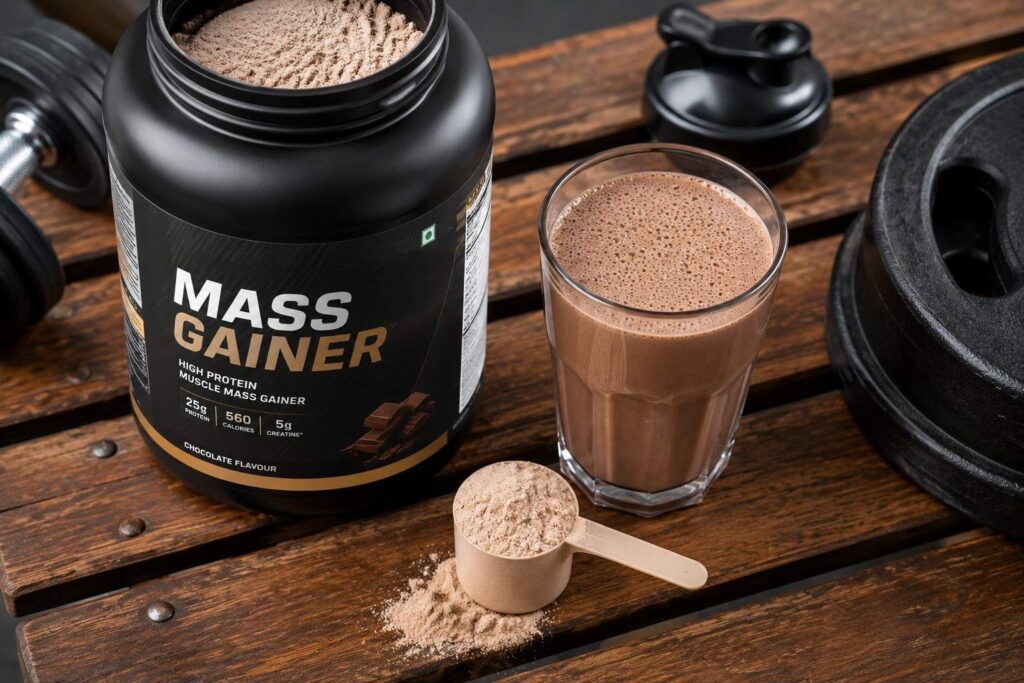
It is not a muscle-building powder on its own. Muscle is built through training, recovery, and a calorie surplus — the gainer is simply a convenient way to hit that surplus when food alone isn’t cutting it. This distinction matters because most confusion around whether beginners should use one comes from treating it like a shortcut instead of a tool.
2. Can Beginners Take Mass Gainer? Here’s the Real Answer
So, can beginners take mass gainer safely? Yes — mass gainers are not restricted to advanced lifters, and there’s no rule that says you need a certain training age before using one. What matters is your body type and your current calorie intake, not your experience level in the gym.
If you’re naturally thin, eat small portions, and struggle to finish even a normal meal, a mass gainer can genuinely help you get enough calories in a day without forcing down multiple heavy meals. If you’re already eating enough and simply not seeing results, the problem usually isn’t a lack of supplements — it’s training consistency or recovery.
3. Who Actually Needs One as a Beginner
Not every beginner needs a mass gainer. It makes sense for you if:
- You’re a hardgainer or ectomorph who struggles to cross 2,000–2,200 calories a day through food alone
- You have a fast metabolism and lose weight easily despite eating regularly
- Your daily schedule (college, job, travel) makes it hard to cook or eat 4–5 solid meals
- You’ve tried adding home-cooked food first and still can’t hit your calorie target
It’s probably unnecessary if you’re already eating well, gaining weight slowly but steadily, or in your first month of training where your body is still adapting to the new stimulus regardless of diet.
4. Mass Gainer vs a Regular Indian Diet
Before reaching for a tub, it’s worth comparing what a mass gainer offers against a simple home diet. A typical Indian bulking plate — rice, dal, roti, paneer, eggs, chicken, and ghee — can deliver a similar calorie and protein profile with far less added sugar and no artificial flavouring.
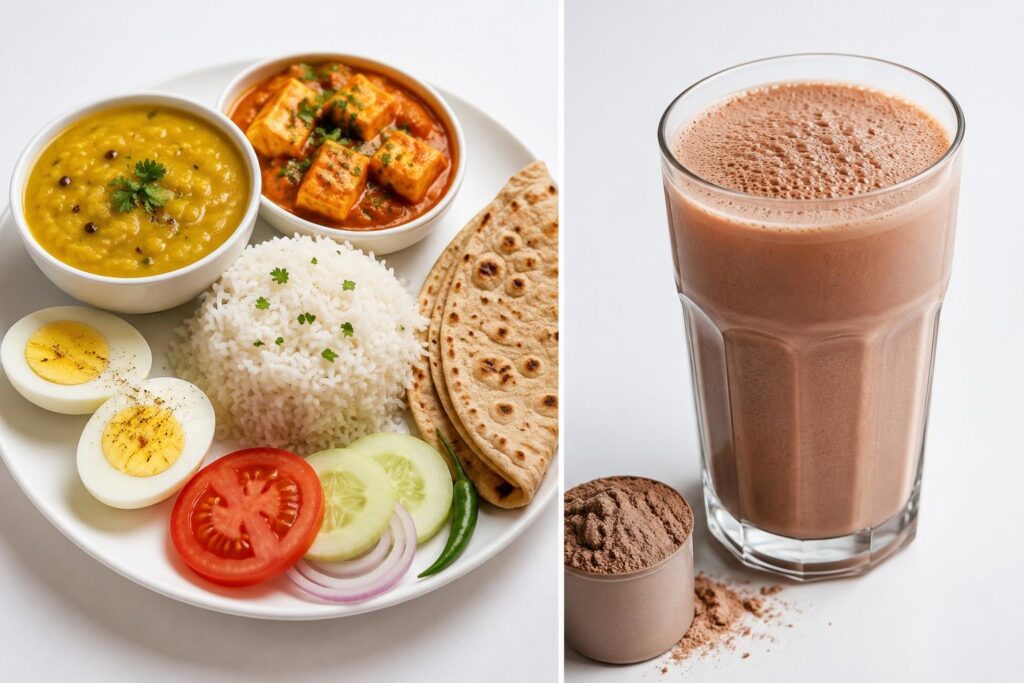
The honest comparison looks like this:
| Home Food | Mass Gainer | |
|---|---|---|
| Cost per day | Lower long-term | Higher (₹80–₹150/serving) |
| Digestive comfort | Generally better | Can cause bloating initially |
| Convenience | Needs prep time | Ready in 2 minutes |
| Micronutrients | Naturally higher | Fortified but processed |
If you want a deeper breakdown of how these products actually differ from plain weight gainers on the market, this comparison of mass gainer vs weight gainer key differences is worth reading before you buy anything.
5. How Many Calories and How Much Protein a Beginner Actually Needs
Most beginners overestimate how much extra they need. A realistic calorie surplus for lean muscle gain is 300–500 calories above your maintenance level, not 1,000+. Protein needs for a beginner training regularly sit around 1.6–2.2 g per kg of bodyweight per day — food can usually supply most of this, with the gainer filling the calorie gap rather than replacing meals.
Loading up on a gainer that adds 1,200 calories on top of an already sufficient diet is the fastest way to gain fat instead of muscle, which is one of the most common beginner mistakes in this category.
6. Best Time for a Beginner to Take Mass Gainer
For someone new to supplements, timing matters less than consistency, but these windows tend to work best:

- Post-workout, within 30–45 minutes, when your body absorbs nutrients efficiently
- Between meals, if you’re struggling to hit your daily calorie target
- Before bed, only if your dinner was light and you need extra calories overnight
Avoid taking it right before a meal, since a full glass of gainer can kill your appetite for the food that should be your primary nutrition source.
7. Common Mistakes Beginners Make With Mass Gainers
- Replacing meals instead of supplementing them — a gainer should add to your diet, not substitute for real food
- Doubling the scoop for “faster results” — this only speeds up fat gain, not muscle gain
- Ignoring the sugar content — many budget gainers are 60–75% maltodextrin, which is essentially added sugar
- Skipping training on rest days but still taking full servings — calorie needs are lower on non-training days
- Not checking third-party lab testing — especially important given the number of unregulated brands in the Indian market
8. Side Effects Beginners Should Watch For
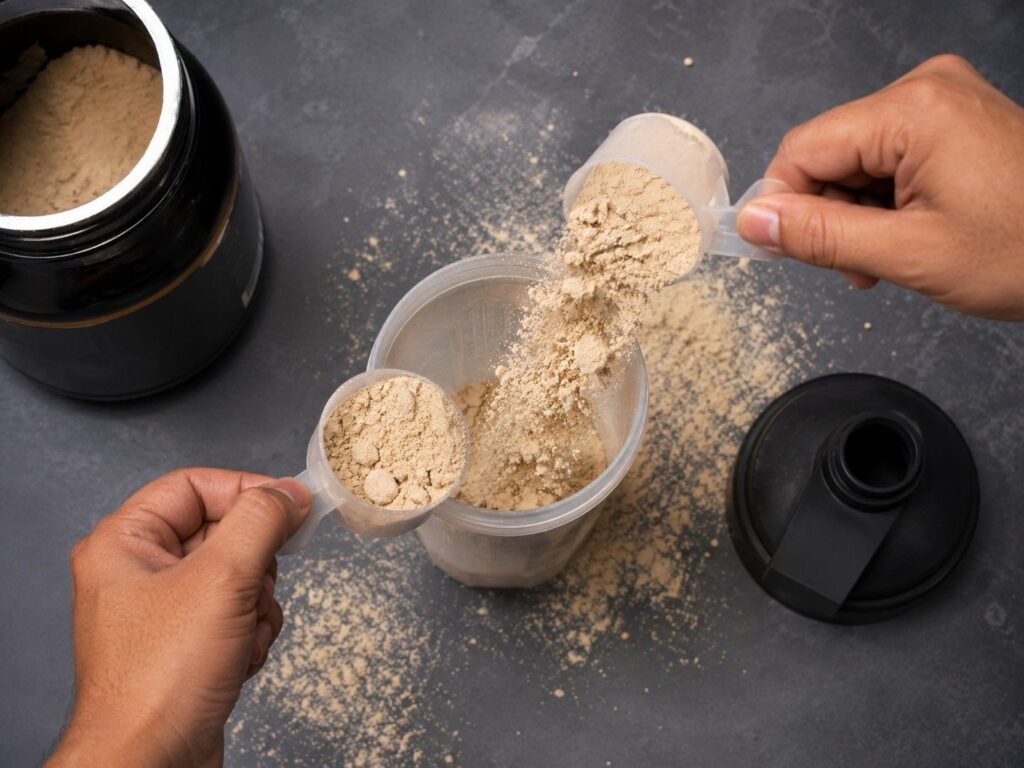
Because gainers are calorie- and lactose-dense, first-time users sometimes experience bloating, gas, loose motions, or acne linked to excess dairy and sugar intake. Starting with half a scoop for the first few days lets your digestive system adjust before moving to a full serving. If bloating persists, look for a gainer with a digestive enzyme blend (like DigeZyme) built in, or switch to an isolate-based, lower-sugar formula.
9. How to Choose the Right Mass Gainer as a Beginner in India
When comparing options, prioritise these factors over marketing claims:
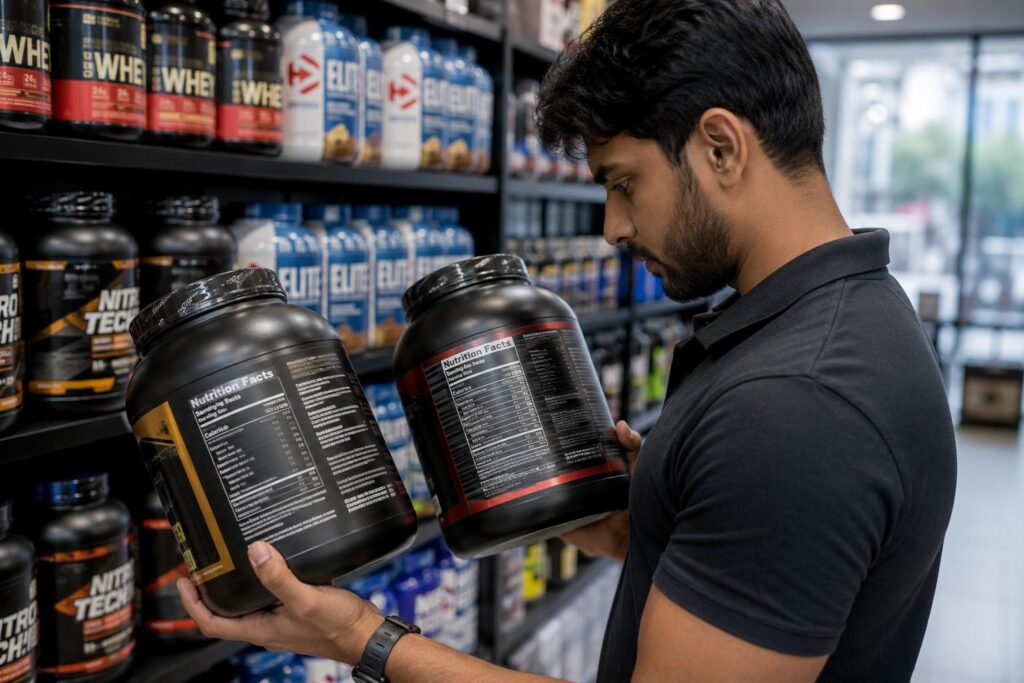
- Protein-to-calorie ratio — look for at least 20–25g protein per 300-calorie serving
- Sugar content — lower added sugar is better for long-term gut health
- Third-party testing — batch-tested products reduce contamination risk
- Budget fit — Indian brands range from roughly ₹600 for entry-level tubs to ₹2,500+ for premium formulas, so there’s no need to overspend as a first-timer
- Flavour and mixability — you’re more likely to stay consistent with something you actually enjoy drinking
Budget options work fine for most beginners; premium formulas mainly add extra micronutrient support and cleaner carb sources, which matter more once you’re further into your training journey.
10. What Results Should a Beginner Realistically Expect?
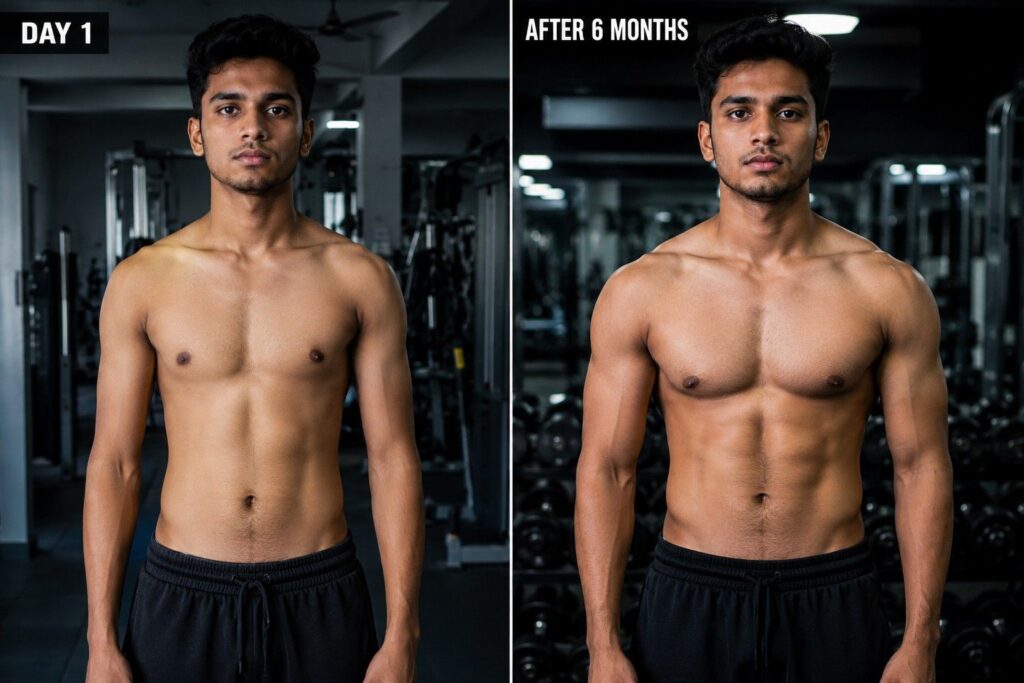
One of the biggest reasons beginners quit early is unrealistic expectations. A mass gainer doesn’t produce overnight transformations — visible changes in weight and muscle typically take 8–12 weeks of consistent training, eating, and supplementation. If you want to see what a realistic progression actually looks like, this breakdown of mass gainer before and after results walks through what changes to expect and by when.
FAQs: Can Beginners Take Mass Gainer?
1. Can beginners take mass gainer without a trainer’s advice?
Yes, it’s safe to start on your own, but it helps to first track your current calorie intake so you know whether you actually need the extra calories a gainer provides.
2. Is mass gainer safe for skinny beginners with no gym experience?
Yes, as long as you’re also training. Taking a gainer without any resistance training will mostly add fat rather than muscle.
3. How much mass gainer should a beginner take per day?
Start with a half scoop to check digestion, then move to a full serving (as per the label) once or twice a day, depending on your calorie gap.
4. Can beginners take mass gainer and whey protein together?
Yes. Many beginners use whey on training days for extra protein and a gainer on days when they’re struggling to eat enough overall.
5. Do beginners need mass gainer or is diet enough?
If you can comfortably eat enough through food, diet alone is enough. A gainer is only necessary when food isn’t practically covering your calorie needs.
6. How long should a beginner take mass gainer before seeing results?
Most beginners notice weight changes within 4–6 weeks and more visible muscle definition by 8–12 weeks, provided training and recovery are consistent.
Final Word
So, can beginners take mass gainer? Yes — but it’s a tool for a specific problem (not enough calories from food), not a universal starting point for every new gym-goer. Assess your diet first, train consistently, and only add a gainer if your calorie intake genuinely falls short. Used correctly, it can make bulking easier; used carelessly, it just adds unnecessary sugar to your day.

 Admin
Admin