 Admin
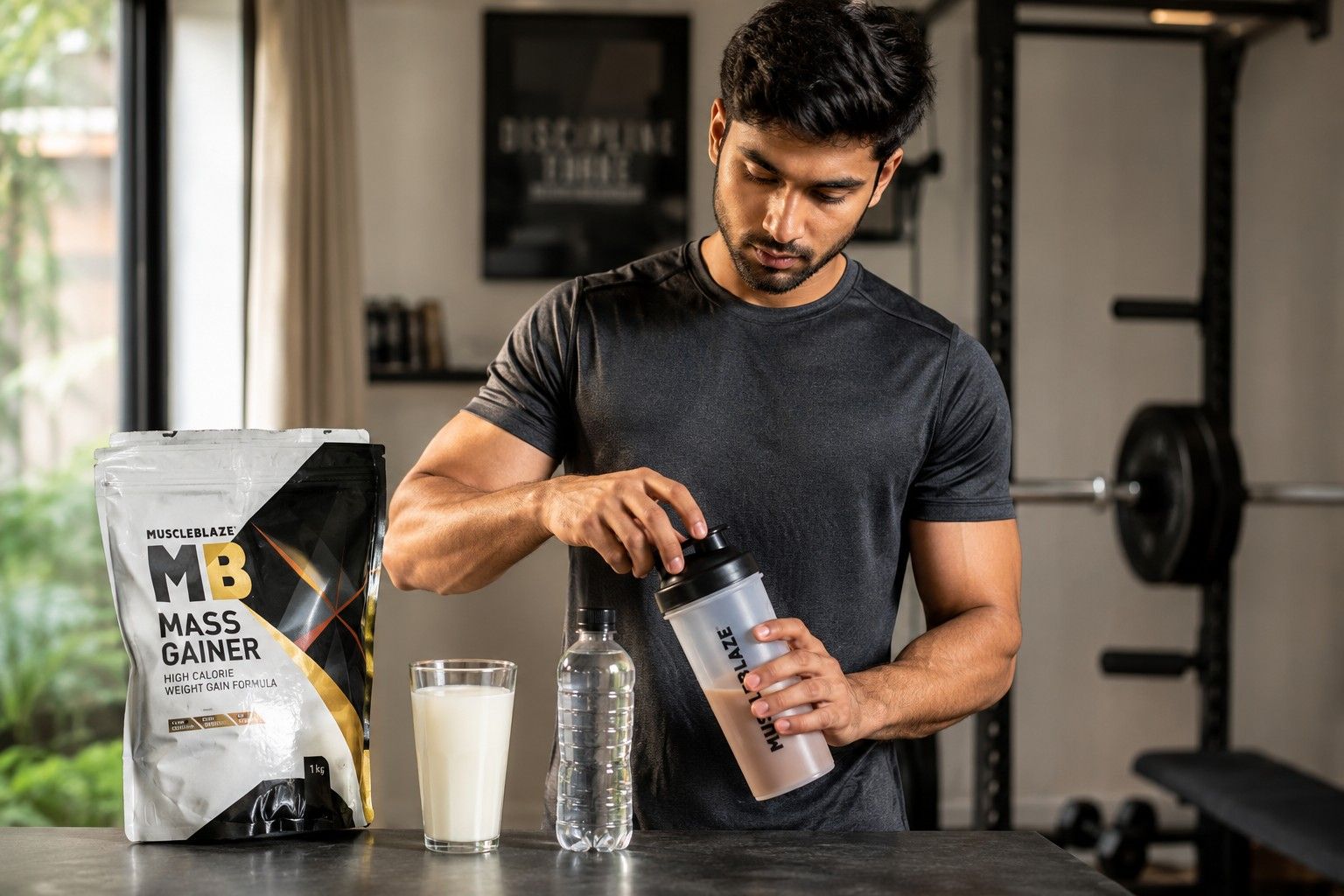
Admin If you’ve just picked up your first tub of mass gainer, there’s a good chance the label confused you more than it helped. It probably says “mix with water or milk” and leaves you to figure out the rest. Walk into any Indian gym and you’ll hear ten different opinions — your senior swears by milk, your trainer pushes water, and your WhatsApp fitness group is split right down the middle.
So which one is actually right for you?

The honest answer: it depends on your body, your goals, and how your stomach handles it. In this listicle, we’ll break down mass gainer with milk or water in plain, practical terms — no bro-science, just what actually works for Indian lifters trying to bulk up on a budget, in a hot climate, with food habits that don’t always match Western fitness advice.
Let’s get into it.
1. Mass Gainer With Milk: The Calorie and Protein Booster
Milk isn’t just a mixer — it’s an ingredient. A regular glass of full-fat milk adds roughly 120–150 extra calories and around 8 grams of additional protein to your shake. For someone trying to pack on size, that’s not a small bonus; it can be the difference between hitting your daily surplus or falling short every single day.
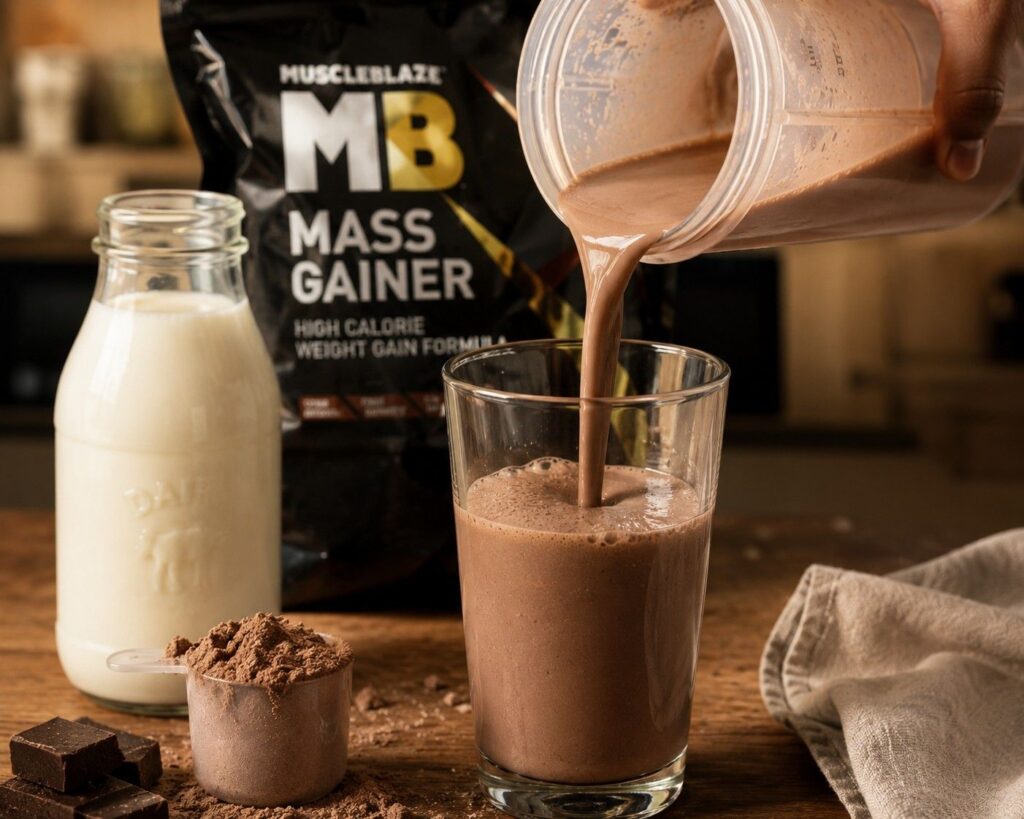
Milk also brings casein and whey together in one glass. Since these proteins digest at different speeds, you get a slower, steadier release of amino acids into your bloodstream — useful for muscle repair overnight or between meals. This is one reason so many Indian bodybuilders have relied on mass gainer with milk for decades, going all the way back to the days of homemade “dabba” gainers made from banana, peanuts, and full-cream milk.
If you’re a hardgainer — someone who eats a lot but still struggles to see the scale move — milk-mixed mass gainer is usually the smarter starting point.
2. Mass Gainer With Water: The Lighter, Easier-to-Digest Option
Now flip the coin. Water adds zero calories and zero extra protein — it’s just there to help the powder dissolve. For some people, that’s exactly what they want.
If your stomach tends to feel heavy, bloated, or “off” after a milk-based shake, mixing with water might solve the problem instantly. It’s also the better call if you’re already close to your daily calorie target through food and don’t want the shake to push you into excess fat storage. Water-based shakes digest faster too, which some lifters prefer right after a workout when the stomach is still settling.
In short: water gives you control, milk gives you a boost. Neither is universally “better” — they solve different problems.
3. Lactose Intolerance Is More Common in India Than You Think
Here’s something most generic international blogs don’t tell you: lactose intolerance rates are notably higher among Indian adults compared to Western populations. If you’ve ever felt gassy, bloated, or had loose motions after a big glass of milk, this might be why — and it has nothing to do with your gym performance.
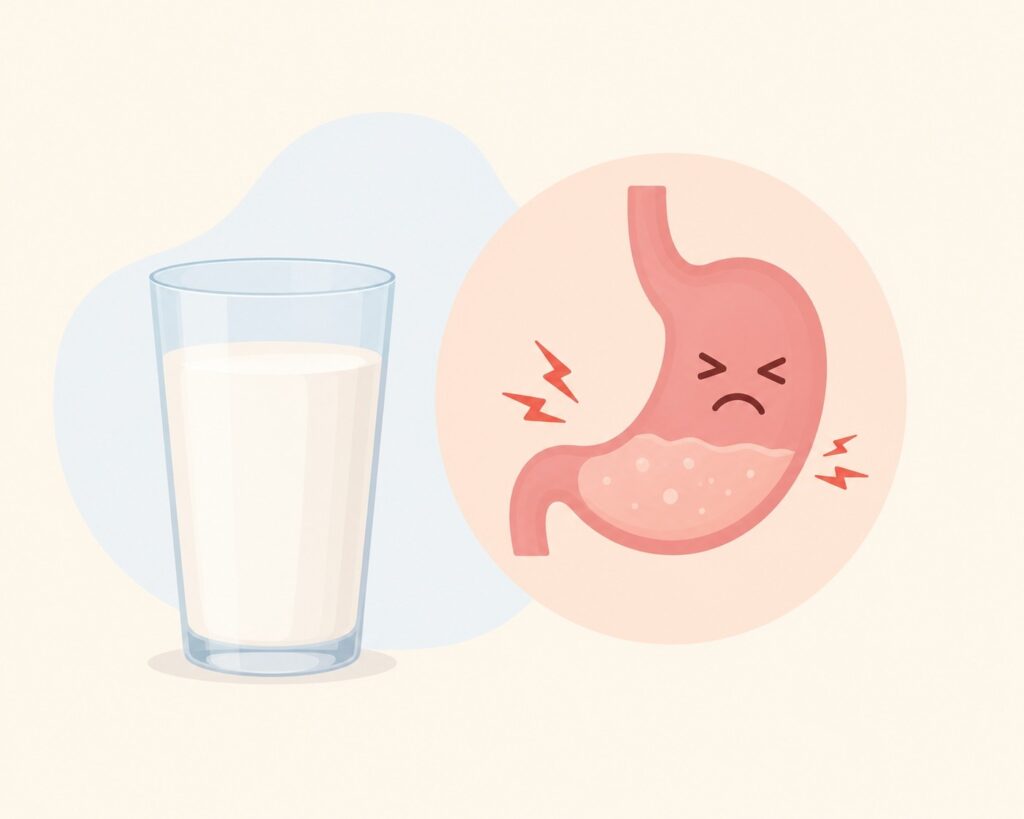
For lactose-sensitive lifters, forcing down a milk-based mass gainer shake twice a day can quietly sabotage digestion, recovery, and even sleep. In this case, water — or a lactose-free/plant-based milk alternative — is the safer choice, even if it means slightly fewer calories per shake. You can always make up the difference with an extra banana or a spoon of peanut butter.
4. Climate Matters More Than People Realize
India’s heat and humidity change how your body handles food and fluids. In peak summer, a thick, creamy milk-based shake can feel heavy and unappealing, and milk itself spoils faster once mixed, especially if you’re carrying your shaker to the gym or office.
Water-based mass gainer shakes are lighter, easier to sip through a workout, and far more forgiving if you’re not drinking it immediately. If you train in the evening after a long, sweaty day, a water-mixed shake is often more hydrating and less likely to sit uncomfortably in your stomach.
5. Milk Helps With Taste — And That Actually Matters
Let’s be honest: most mass gainer flavours are not exciting on their own. Chocolate, vanilla, and kesar-badam versions can taste chalky or artificially sweet when mixed with plain water. Milk smooths that out, adding natural creaminess and a rounder, more pleasant taste.
This matters more than people admit, because the best mass gainer is the one you’ll actually finish every single day without dreading it. If taste is what’s stopping you from being consistent, milk is the easy fix.
6. Mass Gainer With Milk for Bulking, Water for Leaning Out
Think of it as a dial, not a switch:
- Aggressive bulk / hardgainer: Go with full-fat milk to maximise calories and protein per serving.
- Lean bulk / controlled weight gain: Use toned or skimmed milk for some extra nutrition without excess fat.
- Cutting or maintenance while still using a gainer for protein: Stick with water to avoid unnecessary calories.
Many experienced lifters actually alternate — milk in the morning shake when appetite is low, water in the post-workout shake when speed of digestion matters more.
This ties directly into a bigger question a lot of readers ask us: what’s actually different between a mass gainer and a weight gainer in the first place? We’ve covered this in detail in our guide on mass gainer vs weight gainer: 9 key differences, which is worth reading before you even decide how to mix your shake.
7. The Bone Health Angle Nobody Talks About
There’s an often-overlooked benefit to mixing your gainer with milk: calcium balance. High-protein diets, especially when protein intake spikes suddenly, can increase urinary calcium loss over time. Milk’s natural calcium content helps offset this, supporting bone density alongside your strength training.
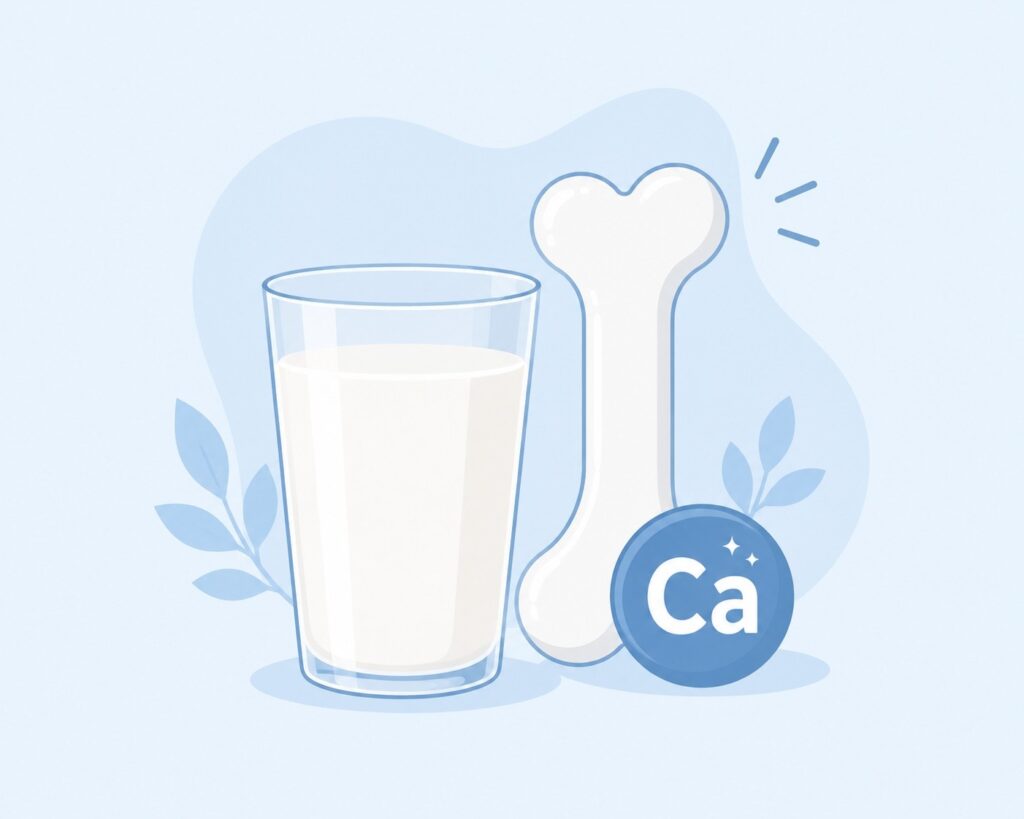
This is a small but genuinely useful reason to include milk in at least one of your daily shakes, particularly if your overall diet doesn’t already include much dairy, paneer, or curd.
8. Plant-Based? You’re Not Left Out
If you’re vegan or simply avoid dairy, you don’t have to choose water by default. Soy milk is the closest plant-based match to dairy milk in terms of protein content, typically offering around 7–8 grams of protein per cup. Oat milk and almond milk are lighter on protein but still add some calories and a creamier texture than plain water.
This gives lactose-intolerant and vegan lifters in India a genuine middle-ground option — more nutrition than water, without the digestive discomfort of dairy.
9. There’s No One “Correct” Answer — Track and Adjust
The most useful thing you can do isn’t picking a side in the milk-vs-water debate — it’s tracking how your body actually responds over 3–4 weeks. Note your weight, energy levels, digestion, and how “clean” or “puffy” your gains feel.

This is exactly the kind of pattern our readers ask about after they’ve been using a gainer for a while — whether the scale is moving in the right direction, and whether that weight is muscle or something else. If you’re at that stage, our detailed breakdown of mass gainer before and after results walks through realistic timelines and what changes to actually expect.
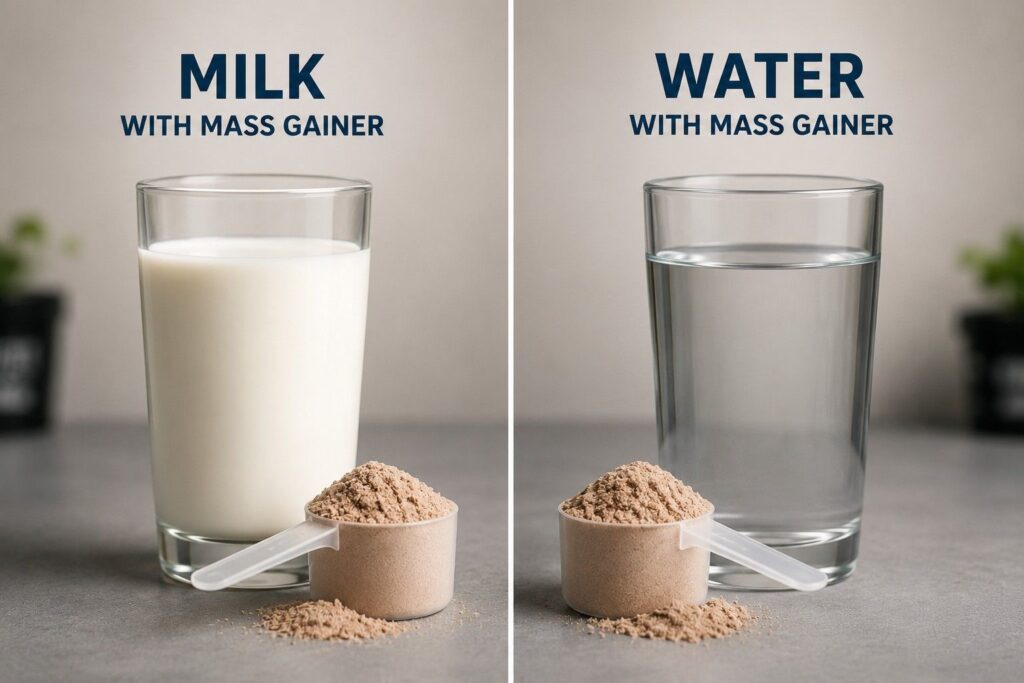
Quick Comparison: Mass Gainer With Milk vs Water
| Factor | Milk | Water |
|---|---|---|
| Calories added | High (120–150+ per glass) | None |
| Protein added | 7–8g extra | None |
| Digestion speed | Slower | Faster |
| Best for | Hardgainers, aggressive bulking | Lean bulk, cutting, lactose-sensitive |
| Taste | Creamier, more palatable | Plainer, sometimes chalky |
| Ideal Indian climate use | Cooler months, morning shakes | Summer, post-workout |
FAQs: Mass Gainer With Milk or Water
1. Is it better to take mass gainer with milk or water for weight gain?
For pure weight gain, milk is generally more effective since it adds extra calories and protein per serving. Water is better if you’re managing your total calorie intake carefully.
2. Can I mix mass gainer with water if I’m lactose intolerant?
Yes. Water — or a plant-based milk like soy or oat milk — is a safer choice if dairy causes bloating, gas, or digestive discomfort.
3. Does mass gainer with milk cause more fat gain than water?
It can, simply because milk adds more calories per serving. If your total daily calories already exceed your needs, milk-based shakes may accelerate fat gain alongside muscle gain.
4. What type of milk is best for a mass gainer shake — full-fat or toned?
Full-fat milk works well for hardgainers who need maximum calories. Toned or skimmed milk suits those who want extra nutrition without excess fat, especially during a lean bulk.
5. Can I switch between milk and water for the same mass gainer?
Absolutely. Many lifters use milk in the morning or pre-bed shake for slow digestion and use water post-workout for faster absorption. There’s no rule against mixing your approach.
6. Does mixing mass gainer with water reduce muscle gain?
Not directly. Water doesn’t hurt muscle-building as long as your total daily protein and calorie intake are on target through food and other meals. It simply skips the extra calories milk provides.
7. Is soy milk a good alternative to dairy milk for mass gainer shakes?
Yes. Soy milk offers a similar protein boost to dairy milk, making it a solid option for vegans or those avoiding lactose while still wanting extra nutrition in their shake.
Final Take
There’s no universal winner in the mass gainer with milk or water debate — and anyone claiming otherwise is oversimplifying it. Milk suits those chasing maximum calories, better taste, and steady muscle recovery. Water suits those managing digestion, avoiding excess fat gain, or dealing with lactose sensitivity, which is genuinely common across India.
The smartest approach for most Indian lifters is a hybrid one: milk when you need the extra calories and can digest it comfortably, water when you want a lighter, faster-digesting option. Pay attention to your body over a few weeks, and let your results — not internet arguments — decide your final answer.

 Admin
Admin