
 Admin
Admin Quick Answer
How do you use mass gainer correctly?
To use mass gainer correctly: calculate your daily calorie needs first, start with half a serving to test tolerance, take it post-workout or between meals (not as a full meal replacement), mix with milk or water, and always pair it with a structured strength training program. Consistency, not quantity, determines your results.
Introduction: Why Most People Use Mass Gainer Wrong
You bought a mass gainer. You mixed it. You drank it. You waited. And nothing happened.
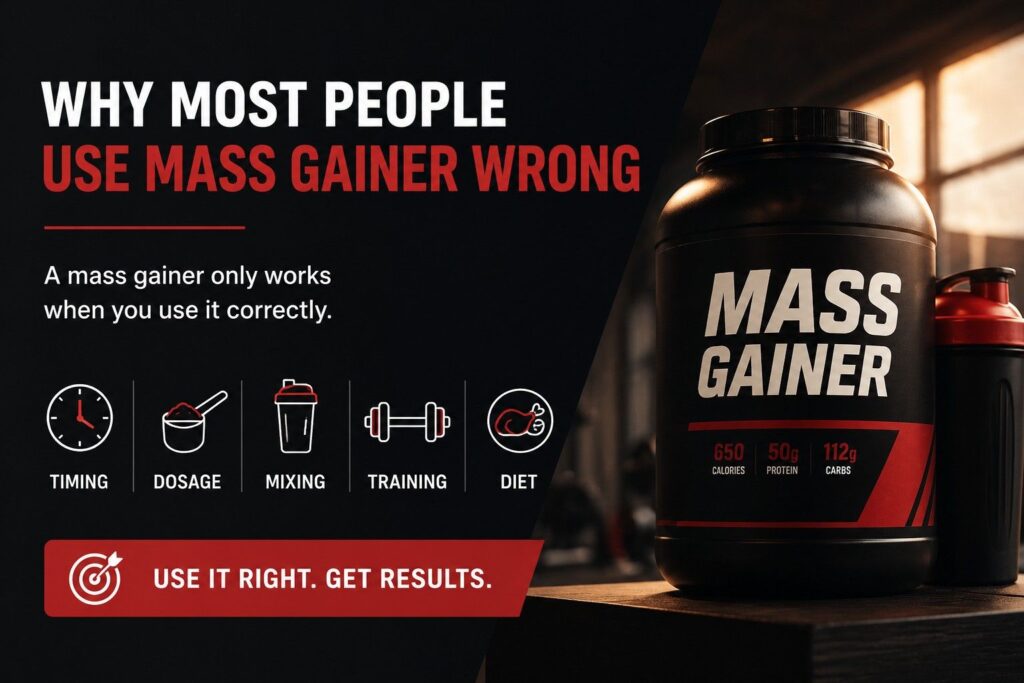
Here’s the truth most brands won’t tell you — a mass gainer only works when you use it correctly. In this guide, you’ll learn exactly how to use mass gainer correctly — from timing and dosage to mixing tips, mistakes to avoid, and how to combine it with your diet and training for maximum results.
This guide breaks down exactly how to use mass gainer correctly — step by step, tip by tip — so you can finally get the results you’re paying for.
What Is a Mass Gainer? (The Foundation You Need to Understand)
- Before diving into the tips, let’s get the basics locked in.
- A mass gainer is a high-calorie nutritional supplement that typically contains a blend of protein, carbohydrates, healthy fats, vitamins, and minerals. It’s specifically designed for individuals who struggle to consume enough calories through whole food alone. Unlike whey protein (which is primarily protein-focused), mass gainers are built to deliver a calorie surplus in one convenient shake.
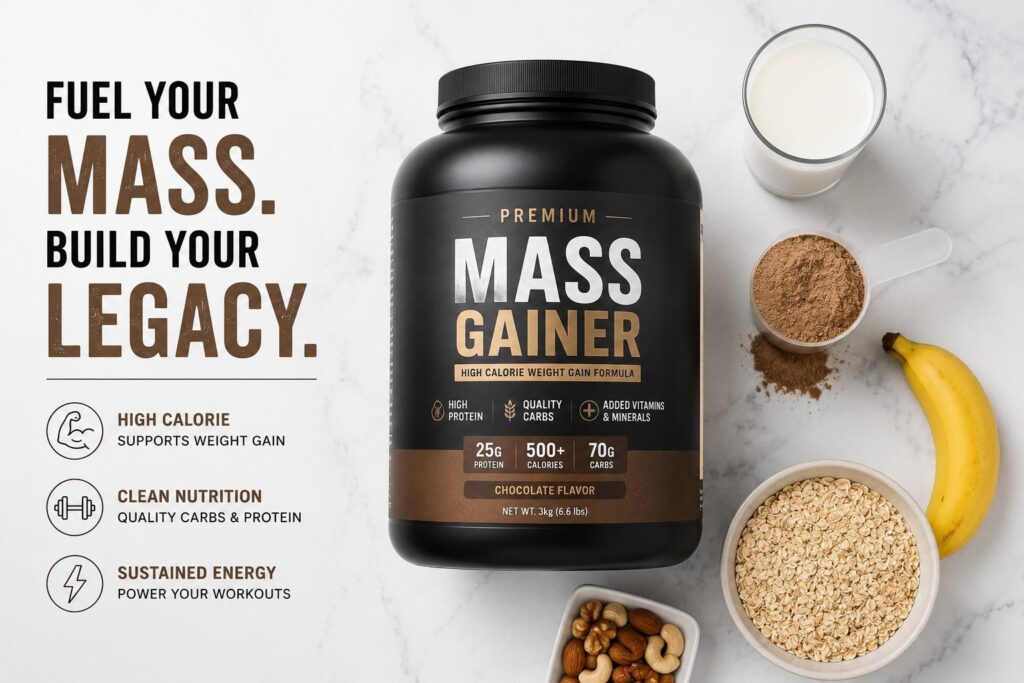
A typical serving contains:
- Calories: 600–1,200 per serving
- Protein: 20–50 grams
- Carbohydrates: 80–200 grams
- Fats: 5–20 grams
- Micronutrients: Added vitamins, minerals, and sometimes digestive enzymes
Who needs it most? Classic candidates include ectomorphs (naturally thin body types), athletes in heavy training blocks, people with high metabolisms, and anyone who struggles to eat enough solid food due to a small appetite or a busy lifestyle — a very common reality for both working professionals in the US and college students across India.
12 Expert Tips on How to Use Mass Gainer Correctly
Tip 1: Calculate Your Daily Calorie Needs Before You Start
This is the step 90% of beginners skip — and it’s the most important one.
- Before you scoop a single serving, you need to know your Total Daily Energy Expenditure (TDEE). This is the total number of calories your body burns in a day. To gain lean mass, you need to be in a calorie surplus of roughly 300–500 calories above your TDEE.
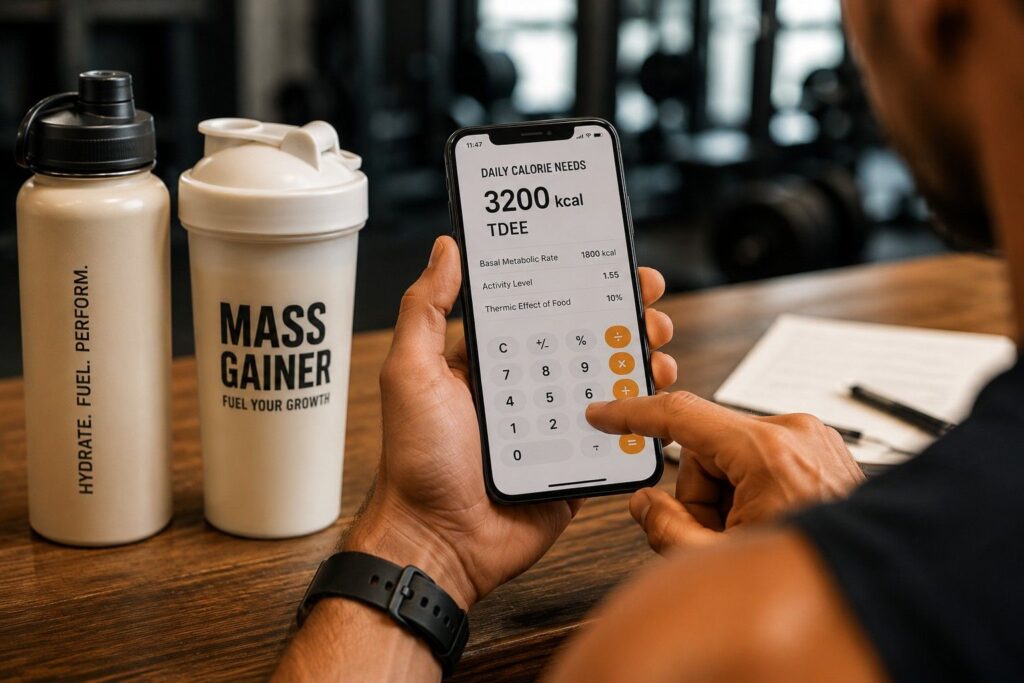
- A mass gainer is not meant to be dumped on top of your existing diet without adjustment. If you’re already eating 3,500 calories per day and your TDEE is 3,000, adding a 1,200-calorie shake will send you far into excess territory — and that shows up as fat.
Action Step: Use any free TDEE calculator online (search “TDEE calculator”), input your stats, and then figure out how many calories your mass gainer needs to fill the gap. Treat it like a calorie adjustment, not a calorie bonus.
Tip 2: Start With Half a Serving — Not the Full Scoop
Every fitness label says “take 2 scoops.” Here’s the real advice from coaches: don’t start there.
- Mass gainers are calorically dense and rich in carbohydrates. Jumping straight into a full serving (which can be 150–200 grams of powder) can overwhelm your digestive system and cause bloating, gas, stomach cramps, and nausea. This is especially true for lactose-sensitive individuals — a large portion of both Indian and American consumers.
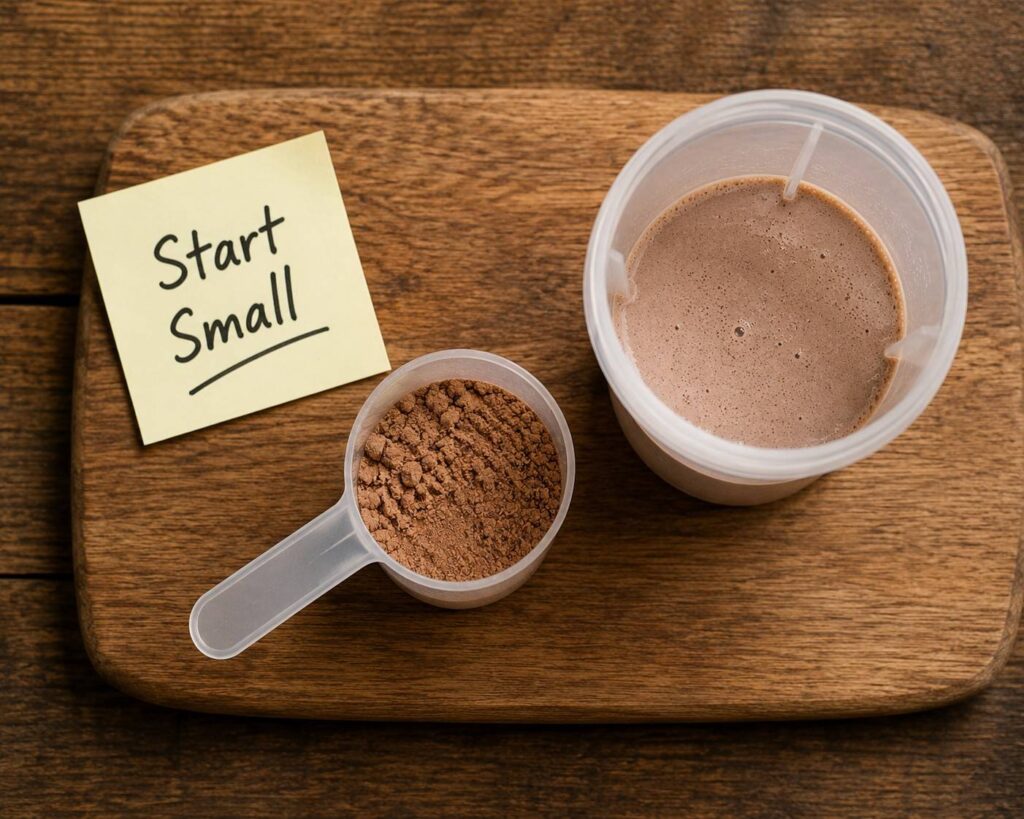
- Starting with half a serving for the first one to two weeks lets your gut adapt gradually. Once your digestion adjusts without discomfort, increase to the full recommended serving.
This approach prevents the most common early dropout reason: “I tried mass gainer but it made me feel terrible.”
Tip 3: Time It Right — Post-Workout Is Your Best Window
When you take mass gainer matters almost as much as how much you take.
The optimal windows, ranked:
1. Post-Workout (Best): After an intense training session, your muscles are in a depleted state and highly receptive to nutrients. Consuming a mass gainer shake within 30–60 minutes of finishing your workout delivers protein for muscle repair and carbohydrates to replenish glycogen stores. This is the anabolic window — use it.
2. Between Meals (Second Best): If hitting enough calories from meals alone is your biggest struggle, use mass gainer as a high-calorie bridge between meals. This prevents long gaps where your body goes into a catabolic (muscle-breaking) state.

3. Pre-Workout (Optional): Taking mass gainer 60–90 minutes before training can fuel your session with sustained energy from complex carbs. Just ensure there’s enough time to digest so you don’t feel heavy during exercise.
4. Before Bed (Situational): A serving before sleep provides nutrients during the overnight fasting period, which supports recovery. Best suited for those who struggle to hit calories during the day. Use a smaller portion here to avoid digestive discomfort while sleeping.
What to avoid: Don’t take mass gainer immediately before or mid-workout. You’ll feel sluggish, and blood goes to your stomach instead of your muscles.
Tip 4: Mix With Milk, Not Just Water (When Appropriate)
The liquid you use matters for both taste and nutritional value.
- Mixing mass gainer with whole milk (or full-fat dairy/plant milk for Indian users) adds an additional 150–200 calories, 8 grams of protein, and a creamy texture. For skinny individuals who need maximum calorie intake, this is a smart move.
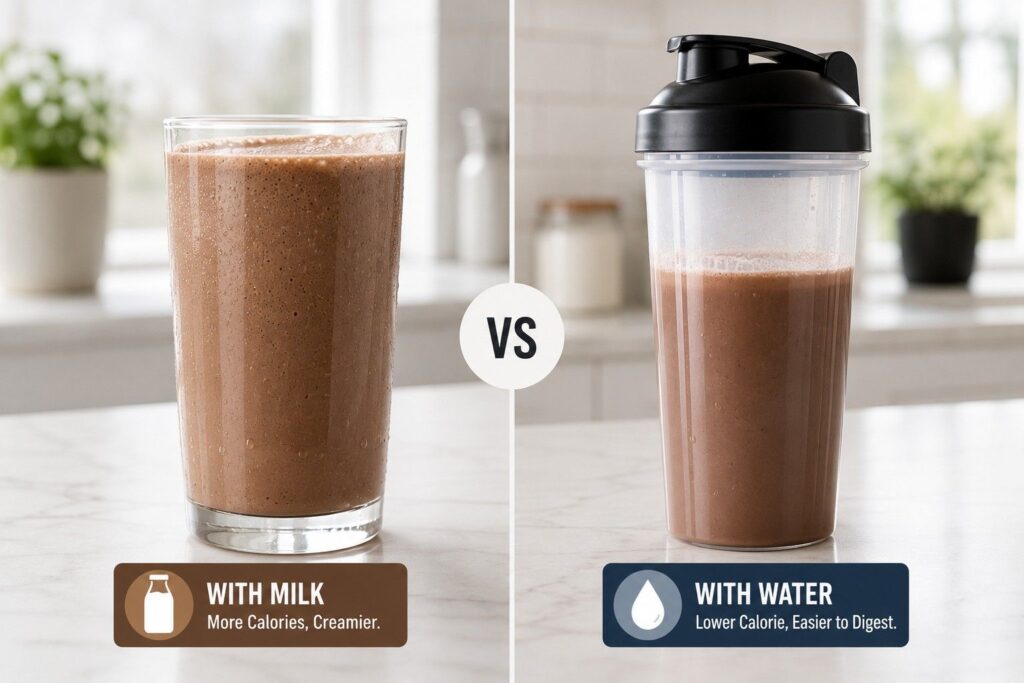
Mixing with water is better if:
- You’re lactose intolerant
- You’re already meeting calorie targets and want to avoid excess
- You have stomach sensitivity
Pro tip for Indian users: Mixing mass gainer with warm milk and a small amount of banana is a popular and effective approach that adds natural sugars and potassium for recovery — an affordable, accessible combination.
Tip 5: Don’t Use Mass Gainer as a Meal Replacement
This is one of the biggest mistakes people make.
- Mass gainers are designed to supplement your diet, not replace your meals. While they deliver calories, protein, and carbs, they lack the full spectrum of micronutrients, fiber, phytonutrients, and antioxidants that whole foods provide.

Swapping meals for shakes may cause:
- Nutrient deficiencies over time
- Digestive issues from lack of dietary fiber
- Increased cravings for unhealthy foods
- Disrupted metabolic rhythm
Your daily meals — rice and dal, eggs and oats, chicken and vegetables — remain the foundation. The mass gainer fills the gap, not the plate.
Tip 6: Pair It With a Structured Strength Training Program
No training program = no muscle gain. Period.
This cannot be overstated: a mass gainer only works when you give your body a reason to use those extra calories for muscle building rather than fat storage. That reason is progressive overload in resistance training.

If you’re consuming an extra 1,000 calories per day and not lifting weights, your body stores the surplus as fat. It’s simple biology.
A minimum effective program looks like:
- 3–4 days per week of compound strength training (squats, deadlifts, bench press, rows, overhead press)
- Progressive overload: gradually increasing weights, reps, or sets over time
- Adequate recovery between sessions
For users in India who train at budget gyms or at home, even a basic program using dumbbells and bodyweight progressions can drive muscle growth when nutrition is dialed in.
Tip 7: Track Your Weight Weekly — Not Daily
Progress tracking keeps you honest and prevents both over- and under-eating.
Weigh yourself once per week, under the same conditions (morning, after using the bathroom, before eating). A healthy rate of lean mass gain is 0.5 to 1 pound per week for most natural lifters. More than that, and you’re likely gaining excess fat. Less than that over multiple weeks, and you may need to increase your calorie intake slightly.
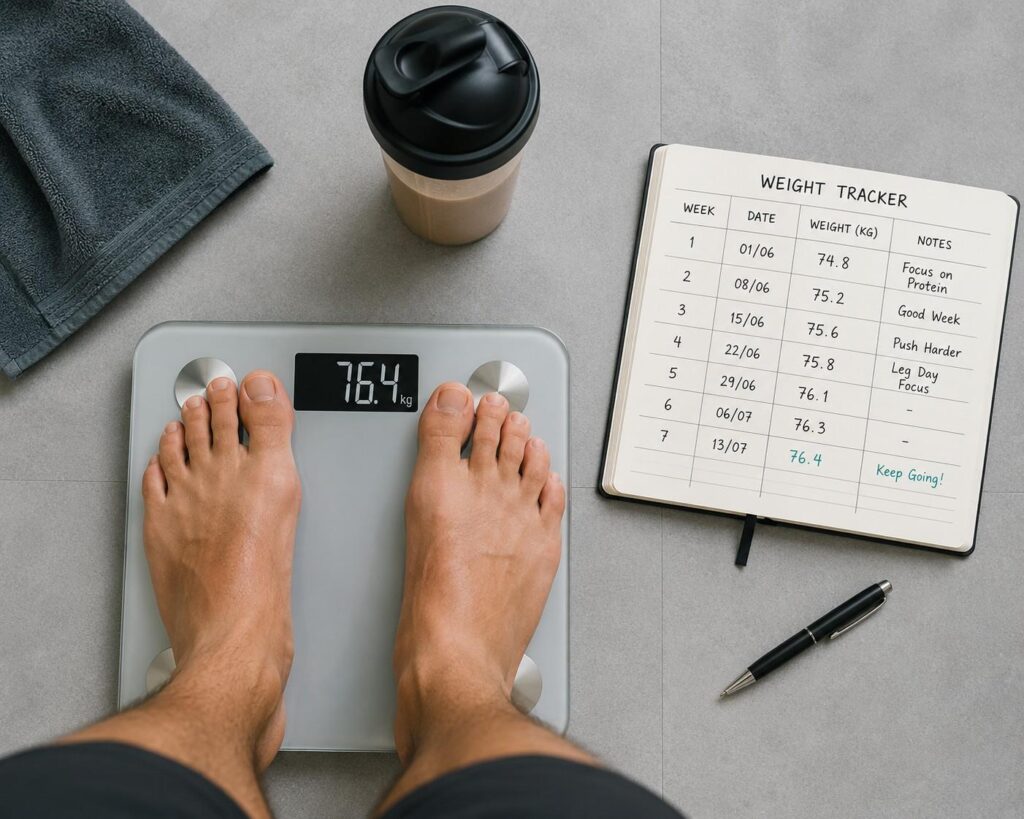
If you’re not seeing weight increase after 3–4 consistent weeks, add another half serving to your daily intake or increase food portions at meals.
If you’re gaining more than 1–1.5 lbs per week, consider reducing your mass gainer serving slightly.
Tip 8: Hydrate — Mass Gainers Demand More Water
High carbohydrate and protein intake increases your body’s demand for water. Mass gainers — especially those high in creatine or certain amino acids — can be dehydrating if you’re not drinking enough fluid.
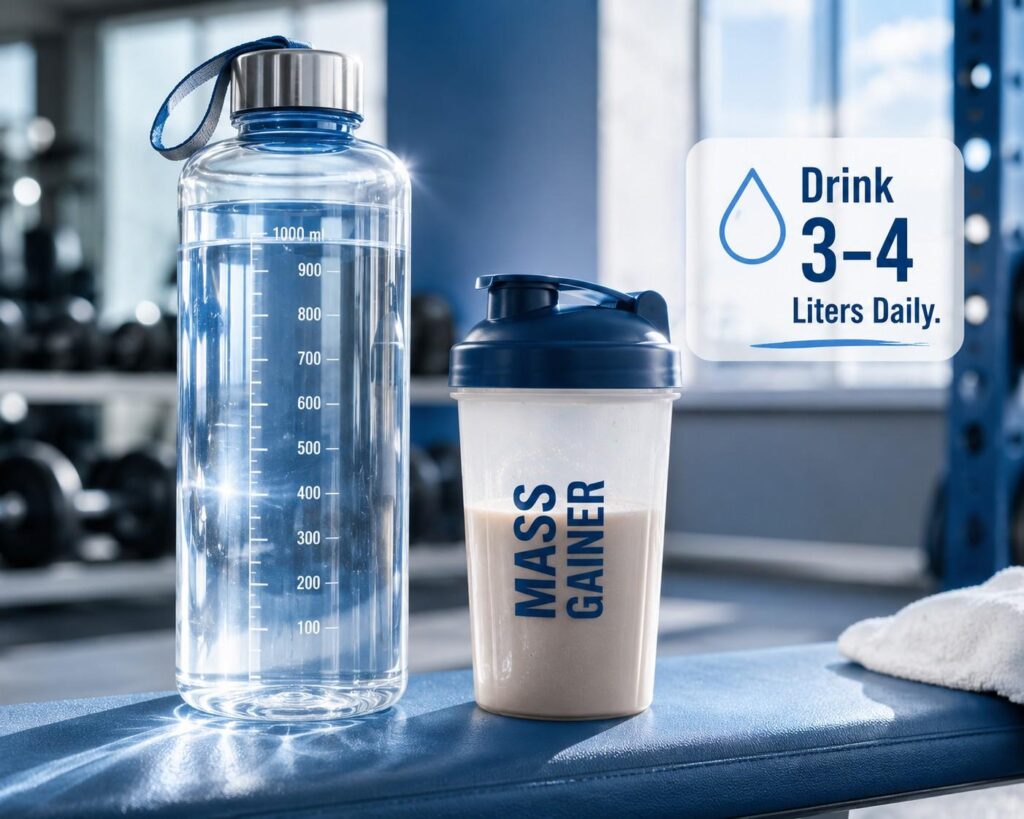
Aim for a minimum of 3–4 liters of water per day when using mass gainer regularly. Signs of dehydration (headaches, dark urine, fatigue) can also mimic overtraining, which confuses many beginners.
In hot climates like much of India, where sweating is significant, hydration becomes even more critical for nutrient absorption and performance.
Tip 9: Choose the Right Mass Gainer for Your Body Type
Not all mass gainers are created equal. The formula you choose should match your specific goals and body type.
For true hardgainers / very skinny individuals: Look for higher-calorie options (1,000+ calories per serving) with a higher carbohydrate-to-protein ratio (around 3:1).
For those who gain fat easily: Choose a “lean mass gainer” with a lower carbohydrate ratio and 25–40 grams of protein per serving. These minimize fat accumulation while still providing a calorie surplus.
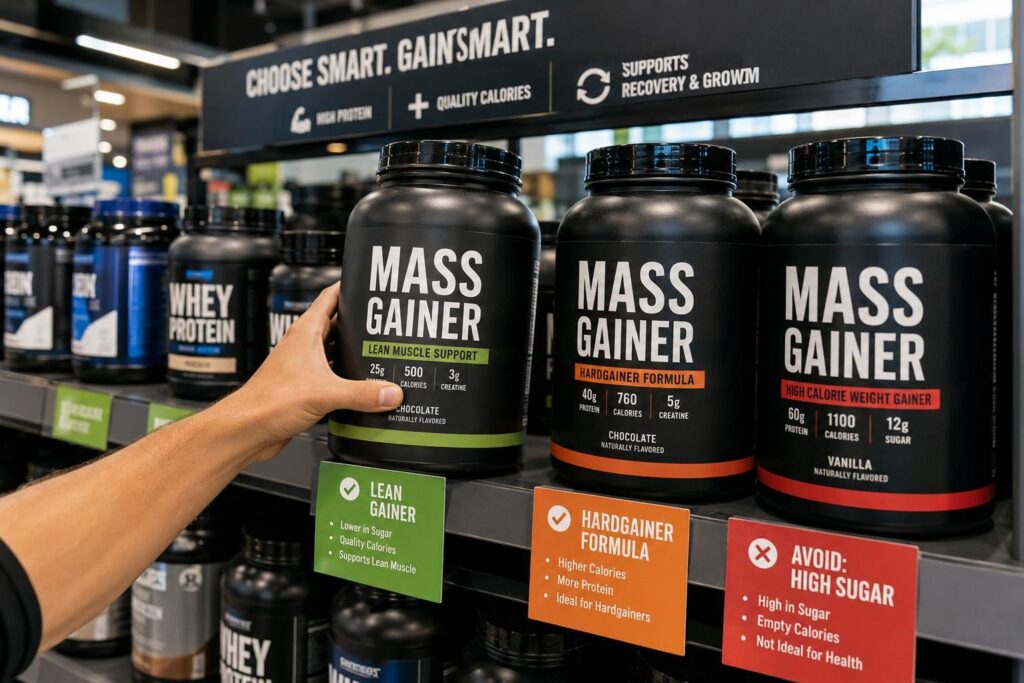
What to look for on the label:
- Complex carbohydrates (oats, sweet potato, maltodextrin) rather than excessive simple sugars
- High-quality protein sources (whey concentrate, whey isolate, or micellar casein)
- Sugar content below 10 grams per serving
- No proprietary blends hiding poor-quality ingredients
- For Indian users: look for FSSAI-certified products to ensure safety and label accuracy
Popular trusted brands in the USA: Optimum Nutrition Serious Mass, MuscleTech Mass Tech Popular trusted brands in India: MuscleBlaze Super Mass Gainer, Labrada Muscle Mass Gainer, AS-IT-IS Nutrition Mass Gainer
Tip 10: Don’t Skip Sleep — Recovery Happens at Night
Mass gainer is a recovery tool as much as a calorie tool.
While you sleep, your body releases growth hormone and performs the majority of muscle repair. Without adequate sleep, even a perfect supplement and training program will yield suboptimal results.

Target 7–8 hours of quality sleep per night. For heavy trainers, 8–9 hours is ideal. Poor sleep elevates cortisol (a muscle-wasting stress hormone), impairs protein synthesis, and increases fat storage — all the opposite of what you want when bulking.
This tip is frequently overlooked by students and young professionals in both the US and India, who trade sleep for screens. It may be the single most underrated aspect of the muscle-building equation.
Tip 11: Stack Smartly — What Works Well With Mass Gainer
Once you’ve mastered the basics, you can layer in complementary supplements for enhanced results.
Creatine Monohydrate (Most Evidence-Backed): Increases strength, power output, and cell volumization. Take 3–5 grams per day, regardless of timing. This is the most researched and cost-effective performance supplement available.
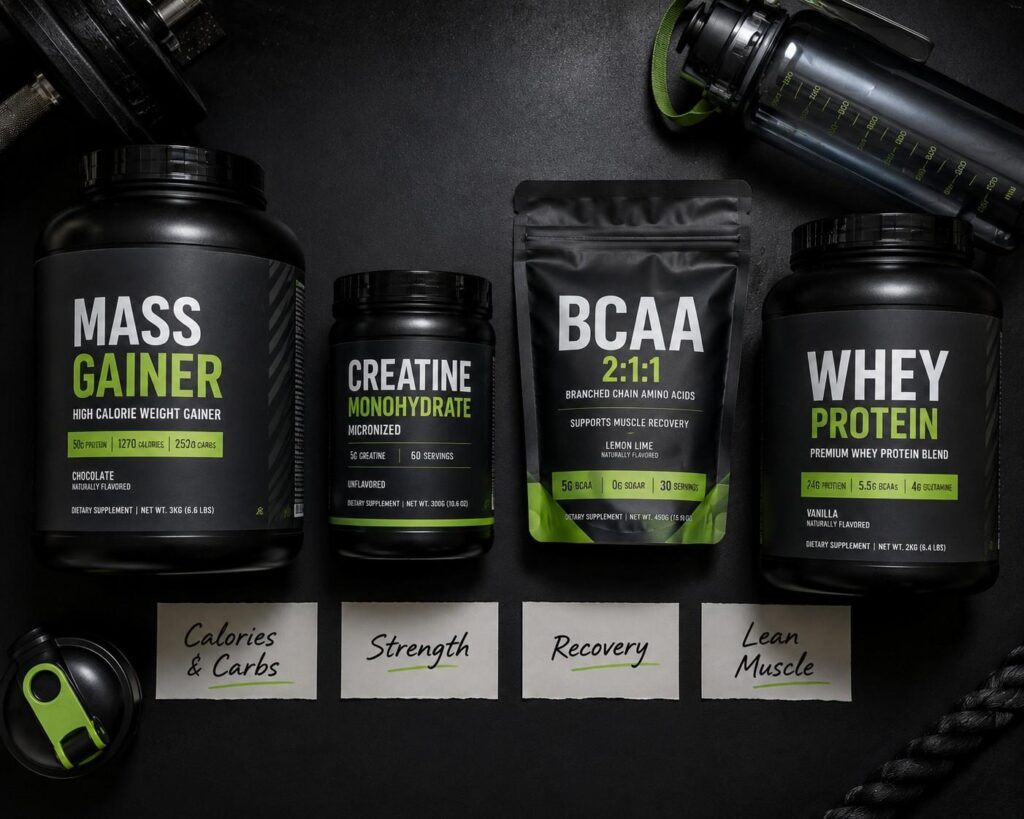
Whey Protein: On non-training days or days when calorie targets are easier to hit from food, swap the mass gainer for a lighter whey protein shake to avoid unnecessary surplus.
BCAAs / EAAs: Can support intra-workout recovery, especially for early morning trainees who train fasted.
What NOT to stack: Avoid doubling up on stimulant-heavy pre-workouts with mass gainers. The carbohydrate crash combined with a stimulant drop can leave you fatigued and irritable.
Tip 12: Avoid These 7 Common Mass Gainer Mistakes
Even with the best product, these errors will kill your progress:
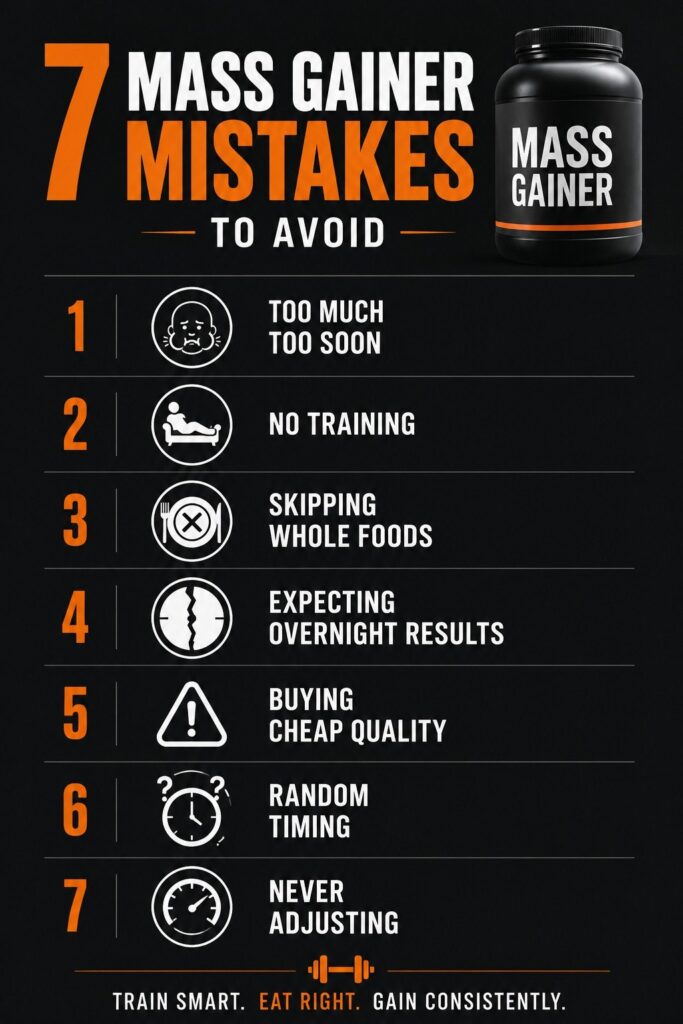
Mistake 1: Taking too much too soon. Your digestion needs time to adapt. Overdoing it causes bloating and discourages consistency.
Mistake 2: Using it without training. Extra calories without resistance training = fat gain, not muscle gain.
Mistake 3: Ignoring whole foods. Supplements supplement; they don’t replace a balanced diet.
Mistake 4: Expecting overnight results. Lean mass gain takes weeks and months of consistency, not days. Most users notice visible changes between 4–8 weeks.
Mistake 5: Choosing the cheapest option blindly. Low-quality gainers are loaded with cheap sugars and fillers. Read the label, always.
Mistake 6: Taking it at random times. Timing affects absorption and how efficiently your body uses the nutrients.
Mistake 7: Not adjusting based on progress. Your body and goals change. Revisit your dosage and timing every 4–6 weeks.
Mass Gainer Dosage Quick Reference Guide
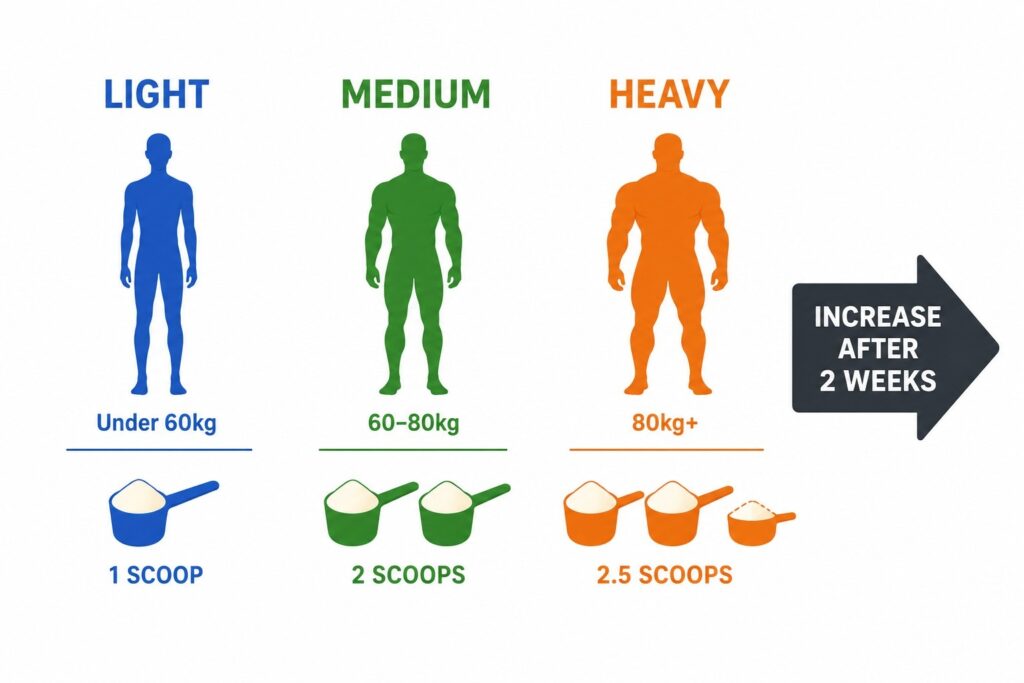
| Body Weight | Starting Dose | Full Dose (After 2 Weeks) | Best Timing |
|---|---|---|---|
| Under 60 kg (132 lbs) | 1 scoop / ~300–400 cal | 1.5–2 scoops / 600–800 cal | Post-workout |
| 60–80 kg (132–176 lbs) | 1 scoop / ~400–500 cal | 2 scoops / 700–1,000 cal | Post-workout + between meals |
| 80 kg+ (176 lbs+) | 1.5 scoops / ~500–600 cal | 2–2.5 scoops / 900–1,200 cal | Post-workout + pre-bed |
Note: These are general guidelines. Always adjust based on your TDEE calculation and weekly weight tracking.
Frequently Asked Questions
Q: Can I take mass gainer every day?
Yes — consistency is key. Daily use is recommended as long as you’re in a training program and your calorie intake aligns with your surplus goals.
Q: Can mass gainer make you fat?
Only if you consume significantly more calories than you burn. When calories are properly calculated and paired with strength training, mass gainers support lean muscle gain, not fat gain.
Q: Is mass gainer safe for beginners?
Yes, when used correctly. Beginners should start with a half serving, prioritize food first, and build up gradually.
Q: How long does it take to see results from mass gainer?
Most users see measurable weight gain within 2–3 weeks, with visible muscle changes appearing around 4–8 weeks of consistent use combined with training.
Q: Can I take mass gainer without going to the gym?
Technically, yes — but the extra calories will likely be stored as fat. Mass gainers are only effective for lean mass building when combined with resistance training.
Q: What’s the difference between mass gainer and whey protein?
Whey protein is primarily a protein supplement (low in calories and carbs). A mass gainer is a high-calorie supplement with a high carbohydrate content, designed for a calorie surplus. Use whey for lean gains; use mass gainer when you struggle to eat enough.
Final Word: Use It as a Tool, Not a Shortcut

- Mass gainer works. The science behind calorie surplus and muscle protein synthesis is solid. But no supplement does the heavy lifting for you — literally.
- The most successful users treat mass gainer as one piece of a larger system: a consistent training program, solid whole-food meals, adequate hydration, quality sleep, and smart timing. Get all five working together, and your mass gainer becomes genuinely powerful.
- Get impatient, skip the basics, or rely on the shake alone — and you’ll be disappointed.
- The body you want is built in kitchens, gyms, and beds. The mass gainer just helps you get there faster.
Discover more helpful information in our related blogs.https://coresuppliments.com/can-i-take-mass-gainer-without-workout/, https://coresuppliments.com/mass-gainer-vs-weight-gainer-9-key-differences/

 Admin
Admin